9 Things to Know About NASA’s Nancy Grace Roman Space Telescope
NASA’s Nancy Grace Roman Space Telescope is scheduled to launch on August 30, 2020, at 7:26 a.m. EDT, succeeding Dr. Nancy Grace Roman’s legacy in space-based astronomy.
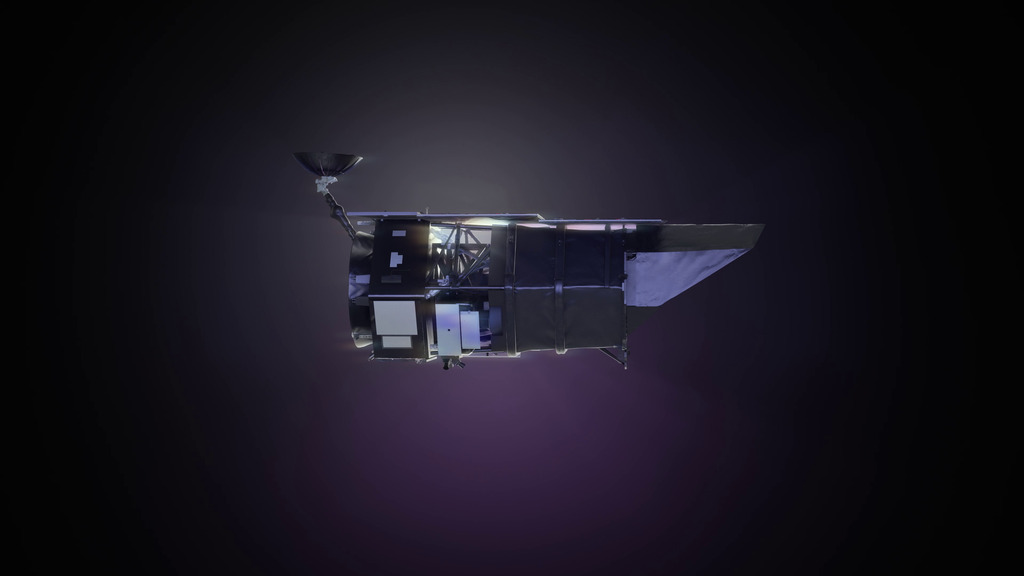
NASA’s Nancy Grace Roman Space Telescope is scheduled to launch on August 30, 2020, at 7:26 a.m. EDT. Named after NASA’s first chief of astronomy, the mission continues her vision of space-based observatories that study the universe above Earth’s atmosphere. Roman will combine a wide field of view with infrared imaging to explore dark matter, dark energy, and exoplanets. The telescope will orbit 1 million miles from Earth at the second Sun-Earth Lagrange point (L2), sharing this location with the James Webb Space Telescope.
The mission’s primary goal is to conduct large-scale surveys of the cosmos, enabling astronomers to study objects ranging from outer solar system bodies to distant galaxies. Roman’s Wide Field Instrument, a 300-megapixel infrared camera, will capture images 100 times larger than Hubble’s with comparable sharpness. Data will be publicly released immediately, allowing global teams to analyze findings simultaneously. The telescope’s Coronagraph Instrument will test advanced technologies for directly imaging exoplanets by blocking starlight to reveal faint planetary light.
Roman will collaborate with other missions, including NASA’s James Webb Space Telescope and ESA’s Euclid mission, to provide complementary observations. Webb will follow up on Roman’s discoveries with detailed infrared analysis, while Euclid’s broader surveys will be enhanced by Roman’s higher-resolution data. Ground-based observatories like the Vera C. Rubin Observatory will also contribute visible-light data to expand scientific insights. This synergy aims to create a more comprehensive understanding of the universe.
The telescope has a planned five-year primary mission with a potential five-year extension, though fuel availability may limit its lifespan. Over 1.3 million names were submitted to be included on a memory card aboard the spacecraft. NASA will broadcast the launch live, with coverage continuing through critical post-launch milestones. After a three-month commissioning phase, science operations will begin, starting with the release of the first science images.