L3Harris’ Viper Shield Undergoes F-16 Two-Ship Flight Testing
L3Harris’ Viper Shield electronic warfare system completed two-ship flight tests with F-16C and F-16D aircraft at Edwards Air Force Base, validating its threat detection and countermeasure capabilities for operational deployment.
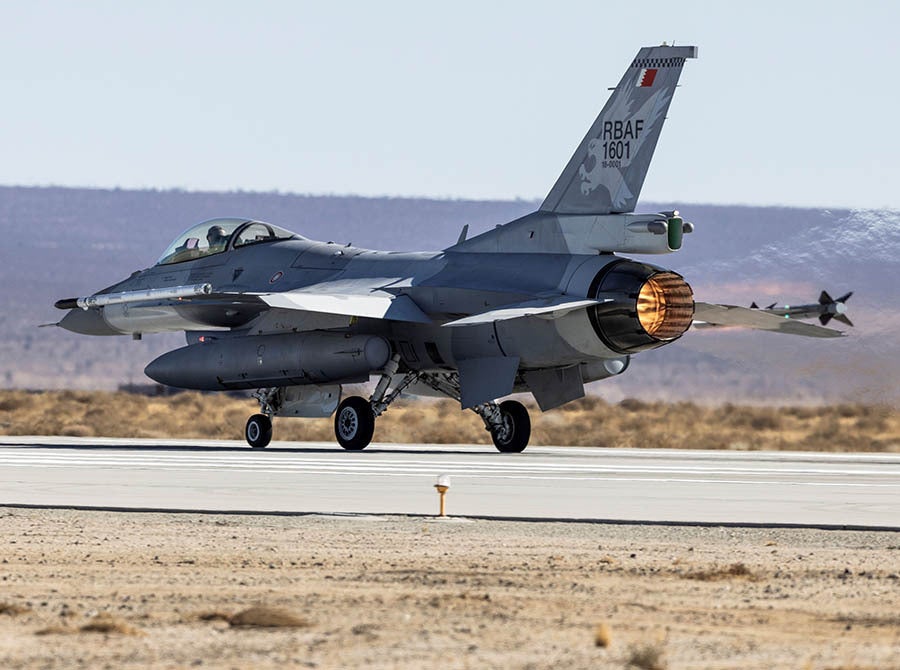
L3Harris Technologies conducted two-ship flight tests of its Viper Shield electronic warfare system with F-16C and F-16D aircraft at Edwards Air Force Base, California. The tests marked the first time the system flew on both variants together, expanding the evaluation across multiple mission profiles. The primary goal was to validate Viper Shield’s ability to detect, identify, and counter modern electromagnetic threats while ensuring compatibility with the aircraft’s existing avionics systems.
Test teams assessed Viper Shield’s digital architecture and real-time response under realistic combat conditions. Lauren Barnes, President of Spectrum Superiority at L3Harris, stated that the system demonstrated strong threat awareness and rapid reaction capabilities during the campaign. Viper Shield is designed as a small-form-factor solution compatible with all F-16 blocks, available either as an internal system or an external pod.
The F-16C variant, the primary combat model, allowed engineers to evaluate system performance under authentic combat configurations, including sensor setups and electronic warfare tactics. The F-16D, typically used for training and multi-crew operations, provided additional validation across diverse flight conditions and mission scenarios, ensuring broader system maturity.
L3Harris is progressing toward full-rate production of 233 planned systems, with eight nations already selecting Viper Shield. The company emphasized its collaboration with the U.S. Air Force test community to validate mission readiness. Barnes noted that the partnership with Air Force personnel was critical in testing the system in realistic operational environments, with production scaling to meet international demand.