Introducing Quine: An AI research system designed for the complexity of biology
Microsoft Research unveils Quine, an AI system designed to model biology across scales and modalities, aiming to accelerate scientific discovery by integrating computational predictions with wet-lab experiments.
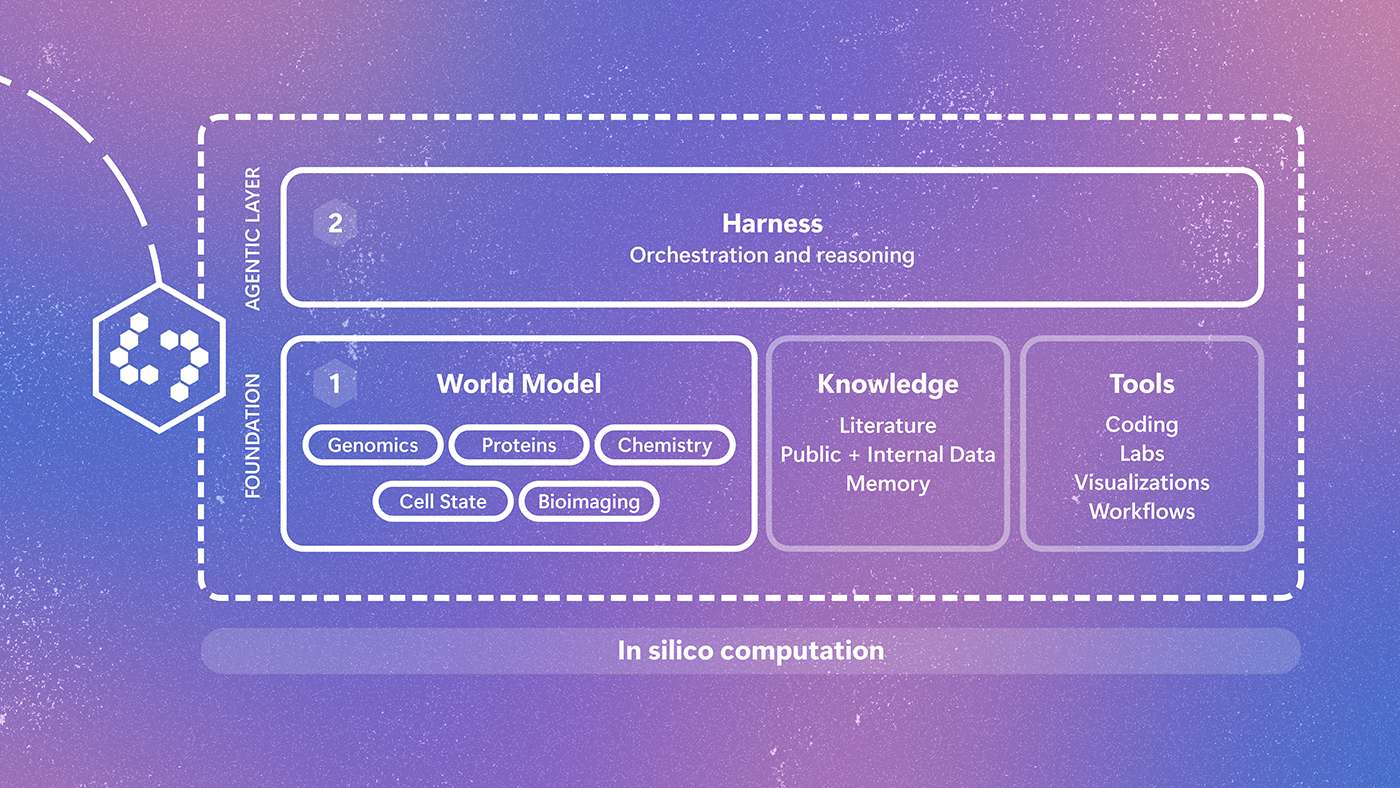
Microsoft Research has introduced Quine, a research system intended to address the interconnected nature of biological systems by modeling relationships across genes, proteins, cells, tissues, and experimental data. The system combines a world model of biology with a technical harness that links scientific tools, literature, lab experiments, and researchers, enabling iterative reasoning and prediction. By learning shared representations across diverse biological data types, Quine aims to capture interactions that single-domain models often miss, reflecting the complexity of real biological systems.
Quine was developed to assist researchers in navigating the slow, iterative process of biological experimentation, where time and complexity often limit progress. The system uses advances in large-scale machine learning, including foundation models and reasoning models, to integrate information across domains and support hypothesis generation. Microsoft emphasizes that Quine is not intended to replace experiments but to prioritize and refine experimental paths before committing limited lab resources, potentially reducing time and cost in research cycles.
In a concrete application, Microsoft collaborated with researchers at the Broad Institute of MIT and Harvard to test Quine’s capabilities in studying pancreatic ductal adenocarcinoma (PDAC). The team used Quine to predict and rank thousands of compounds based on their potential to shift tumor cell states, narrowing the search space to a handful of candidates in a single weekend. Wet-lab experiments confirmed that Quine’s top-ranked compounds produced the largest intended shifts, demonstrating its utility in accelerating drug discovery and identifying unexpected mechanisms of action.
Quine is being embedded into Microsoft Research’s ongoing scientific programs, including cancer biology, protein engineering, genomics, and bioimaging, to refine models and workflows through real-world feedback. Microsoft is also launching the Quine Fellows program to involve external scientists in the system’s development, acknowledging that advancing such a system requires collaboration across the broader research community. The effort reflects a long-term vision of a continuously accelerating loop between computational prediction and experimental validation.