Mapping Air Pollution With MAIA Sensors in Addis Ababa
NASA’s MAIA mission deploys 10 air sensors in Addis Ababa to map PM2.5 pollution over three years, revealing daily and seasonal variations linked to health risks such as respiratory conditions and premature mortality.
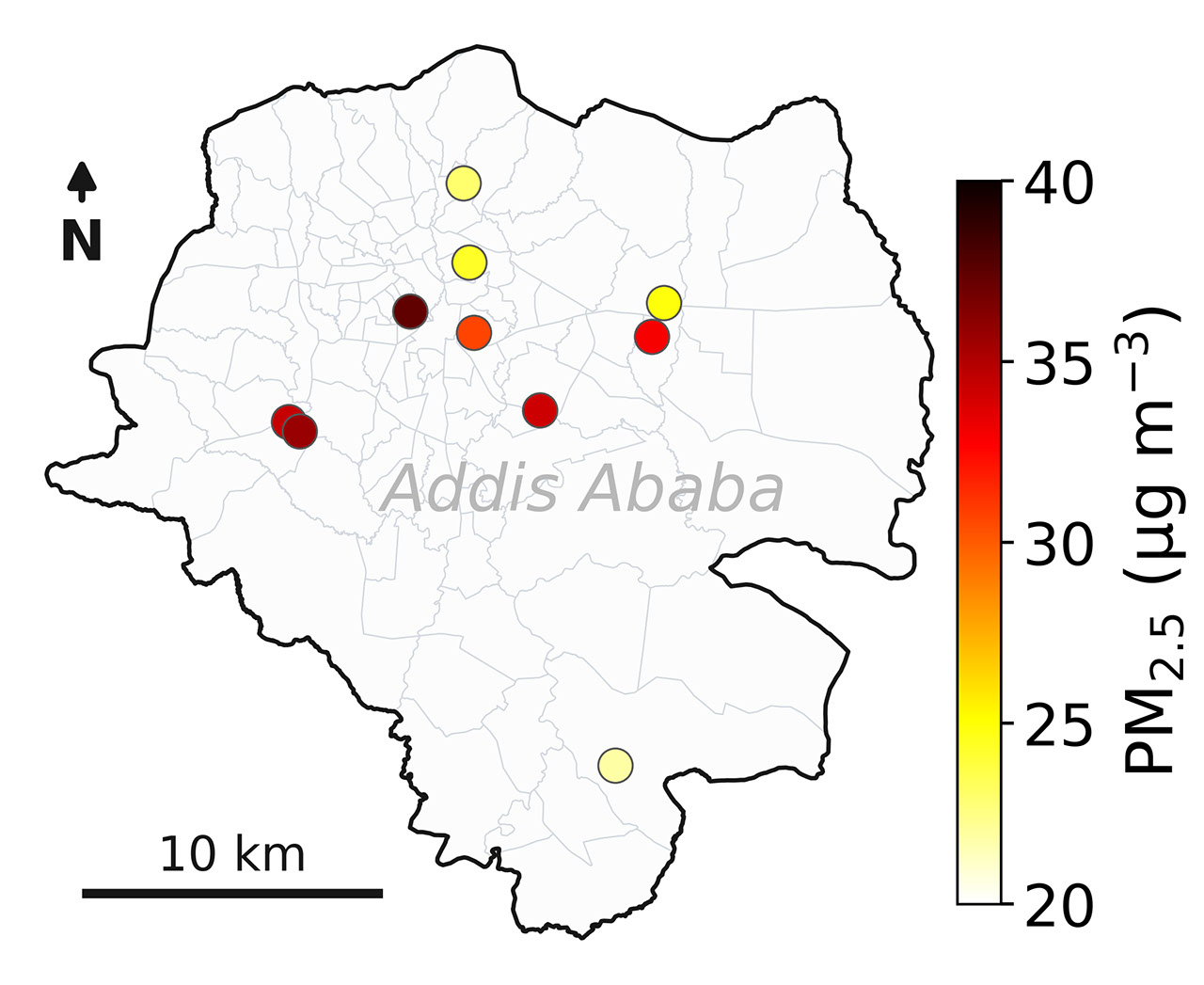
NASA’s Multi-Angle Imager for Aerosols (MAIA) mission has installed 10 ground-based sensors across Addis Ababa to measure fine particulate matter (PM2.5) over a three-year period. The sensors track pollution levels ranging from 20 to 40 micrograms per cubic meter, with data showing how air quality fluctuates by time of day and season. Black carbon, a major component of PM2.5 in the city, is primarily emitted from diesel vehicles, fires, and other combustion sources, contributing to health risks such as low birth weight and respiratory diseases.
The MAIA mission’s findings in Addis Ababa are part of a broader effort to study air pollution in 12 regions worldwide, including three in the United States focused on Los Angeles, Atlanta, and Boston. The research aims to provide detailed insights into how different types of PM2.5 aerosols affect public health, with data collected from both ground-based sensors and a future space observatory. The mission is a collaboration between NASA and the Italian Space Agency (ASI), which will launch the space observatory no earlier than late 2027.
The space observatory, equipped with a specialized camera built at NASA’s Jet Propulsion Laboratory, will help identify specific types of PM2.5 aerosols by analyzing how they reflect light. This technology enables the mission to create high-resolution maps of particle concentrations across each study region, including Addis Ababa. The data will support efforts to address air quality challenges in urban areas globally.
The MAIA mission’s work in Addis Ababa highlights the link between air pollution and public health, particularly in cities with high levels of particulate matter. By providing detailed, location-specific data on PM2.5 and black carbon, the mission aims to inform policies and interventions to reduce pollution and its associated health impacts. The findings are expected to be relevant to cities worldwide, including those in the United States.