NASA to Cover Three US Spacewalks, Host Preview News Conference
NASA announced three upcoming spacewalks in August to upgrade the International Space Station, including solar array modifications and antenna replacement, with a preview briefing scheduled for July 30.
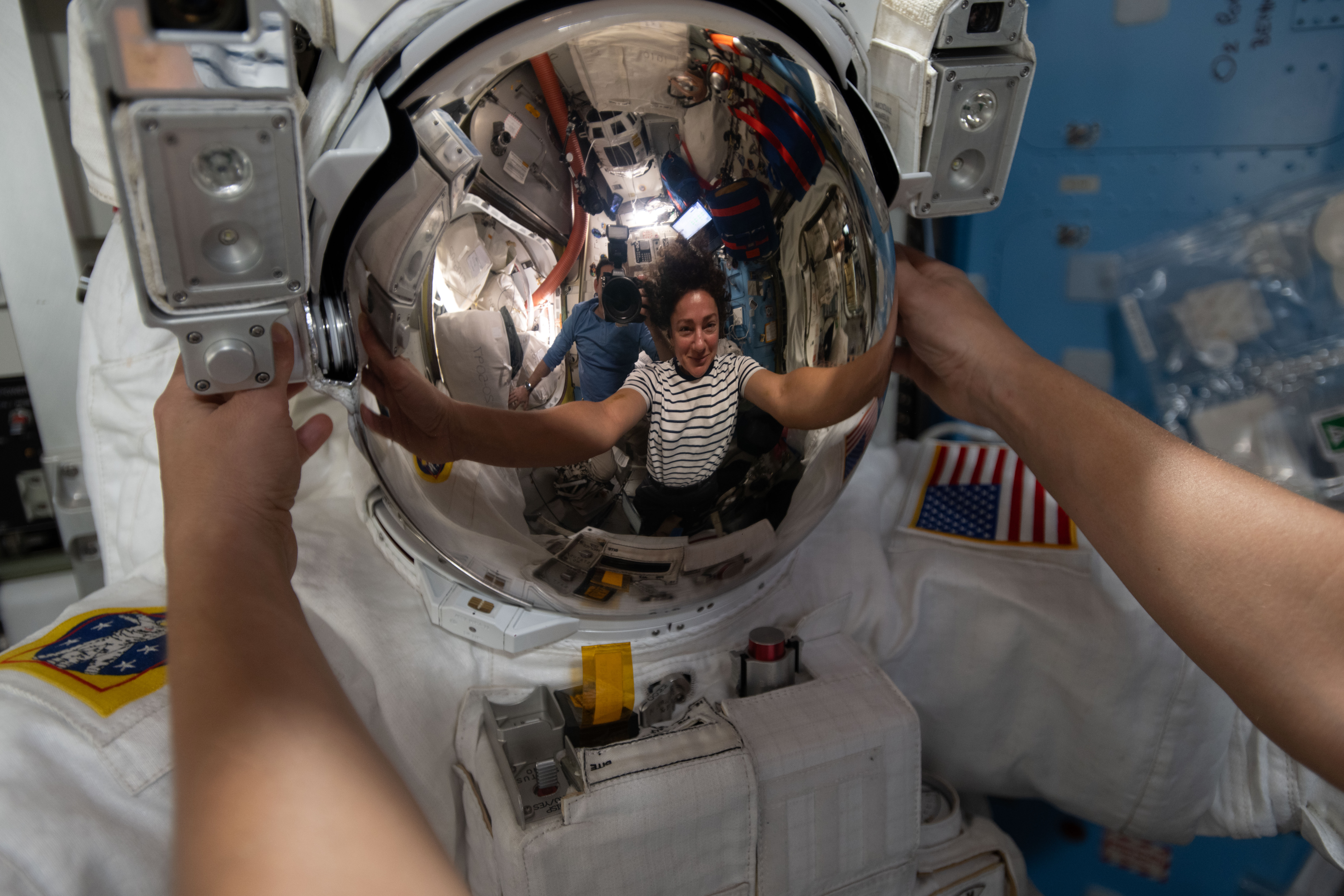
NASA will broadcast live coverage of three U.S. spacewalks scheduled for August, beginning with a preview news conference at 2 p.m. EDT on July 30 from Johnson Space Center in Houston. The briefing will outline plans for spacewalks on August 6, 13, and an unspecified later date, focusing on solar array upgrades, communications antenna replacement, and power channel maintenance. Media wishing to attend in person must contact NASA by July 29, while phone participants should request dial-in details by the same deadline.
During the first spacewalk on August 6, astronauts Jessica Meir and Anil Menon will install hardware to modify the station’s 3B power channel and prepare for the future installation of a seventh International Space Station Roll-Out Solar Array (IROSA). The spacewalk, expected to last six and a half hours starting at 8:35 a.m., will be Meir’s sixth and Menon’s first. Meir will wear a suit with red stripes, while Menon will wear an unmarked suit.
The second spacewalk, U.S. spacewalk 97, will involve replacing a Space-to-Ground antenna, a critical system for transmitting data and high-speed communications between Mission Control in Houston and the space station. The third spacewalk, U.S. spacewalk 98, will focus on connecting power channel cables, data relay systems, and replacing a navigational aid on the Harmony module’s forward port as part of ongoing maintenance.
These spacewalks mark the 281st, 282nd, and 283rd conducted to support the International Space Station’s assembly, maintenance, and upgrades. NASA will provide additional details about the timing, assigned crew members, and coverage for the second and third spacewalks closer to each operation.