All Systems Go: Global PC App Ecosystem Ready for NVIDIA RTX Spark
NVIDIA RTX Spark integrates gaming, creative and AI capabilities into a single chip, launching October 16 with new local AI tools, security features and optimized software for creators and developers.
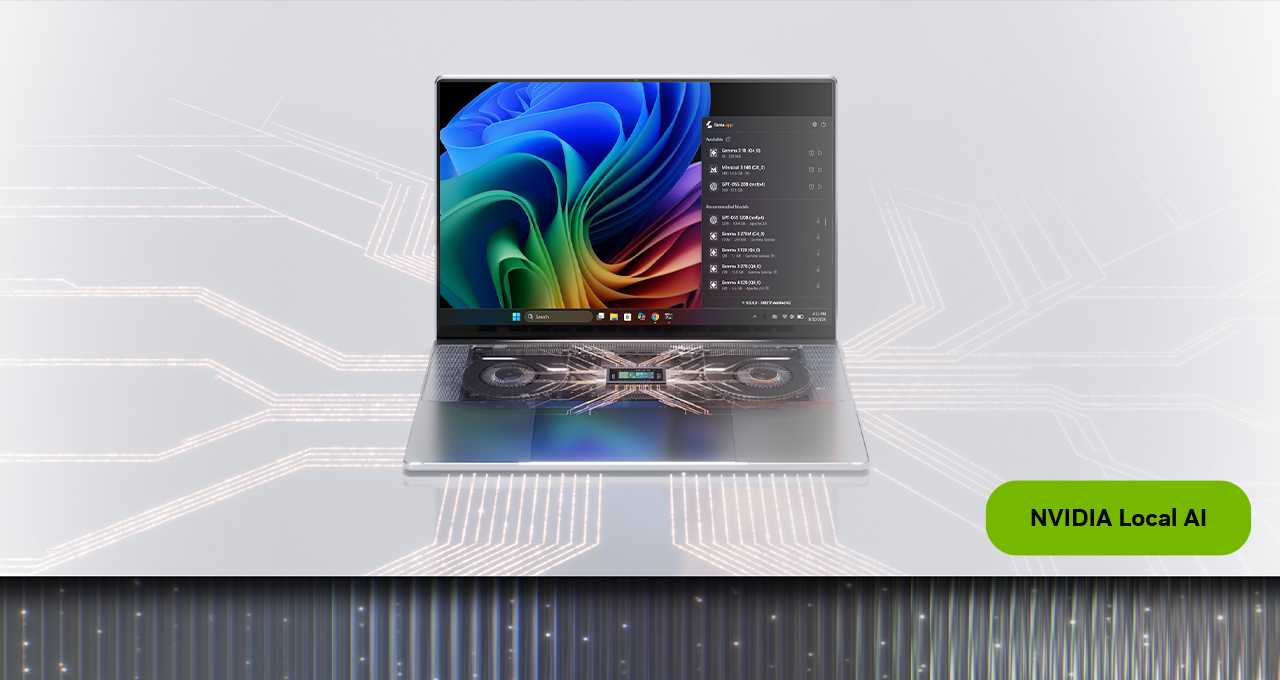
NVIDIA RTX Spark combines gaming, creative and AI computing into a single chip with up to 128GB unified memory and 1 petaflop of AI compute, enabling local AI agents and high-performance tasks. Laptops featuring RTX Spark will be available starting October 16, following software updates and performance optimizations from NVIDIA and ecosystem partners. The platform introduces new features such as secure sandboxing via NVIDIA OpenShell and MXC, alongside agent installation tools and optimized local AI model setups for RTX Spark users.
Local large language models (LLMs) have reached a performance threshold enabling practical AI agents, with downloads already five times higher than last year. NVIDIA is collaborating with the local AI ecosystem to ensure RTX Spark serves as the primary hardware for running these agents securely and efficiently. New security technologies like OpenShell and MXC provide operating system-level protections, while agent apps such as Hermes and OpenClaw integrate these features to enhance safety and usability.
NVIDIA Switchyard, an open-source model router, allows agents to intelligently balance local and cloud LLM usage, reducing cloud dependency while maintaining performance. Software providers including GitHub Copilot and Perplexity have integrated routing solutions or support MXC, simplifying connections to top Windows applications. NVIDIA has also released MCPs for its applications and AI playbooks to guide users in setting up agents and optimizing their RTX Spark systems for development or creative tasks.
RTX Spark supports over 130 accelerated apps and NVIDIA technologies like DLSS and OptiX, enhancing content creation workflows in Adobe’s Photoshop, Premiere and Substance 3D. New updates to Adobe’s creative tools deliver up to 2x faster AI-driven features, while NVIDIA Broadcast 2.3 introduces RTX Video Super Resolution and offline processing capabilities for creators working with prerecorded content.