Germany Wants to Lead the World in Industrial AI: How NVIDIA Will Help
Germany and NVIDIA formalized a partnership to advance industrial AI, aiming to integrate AI into manufacturing and automotive sectors while supporting SMEs through targeted investments and collaboration.
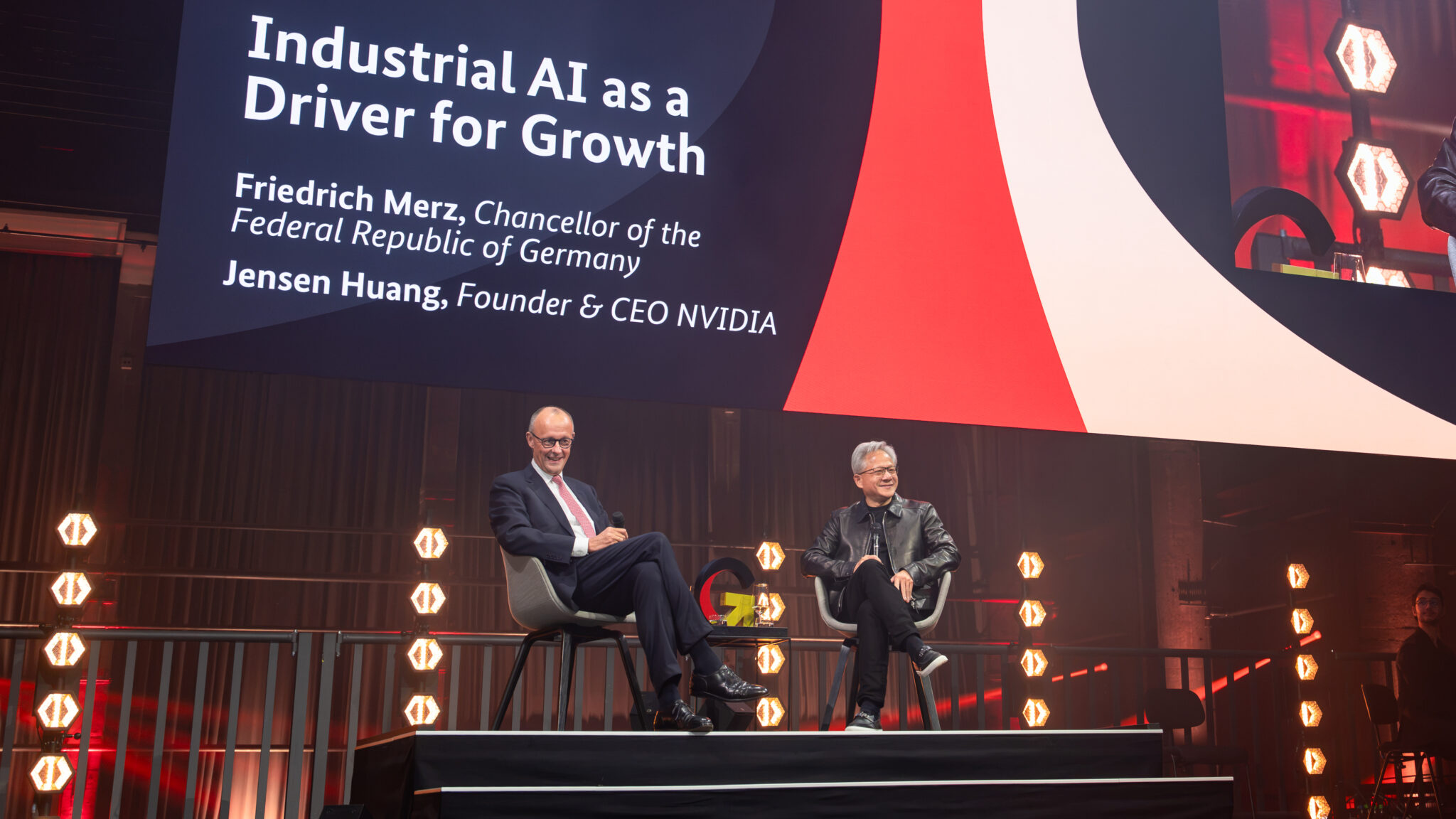
During a meeting at Berlin’s Kraftwerk, German Chancellor Friedrich Merz and NVIDIA CEO Jensen Huang discussed Germany’s AI strategy, emphasizing industrial applications and the country’s strengths in manufacturing and automotive. Huang highlighted NVIDIA’s decades-long collaboration with German industry, from early gaming systems to modern autonomous vehicles and digital twins. The discussion centered on leveraging Germany’s engineering expertise and encouraging AI adoption across small and medium-sized enterprises to drive economic growth.
The German federal government and NVIDIA signed a Joint Declaration of Intent to advance AI models for physical applications, aligning with the government’s goal to integrate AI into industrial processes. The initiative builds on Germany’s ‘Industry 4.0 Platform,’ which includes stakeholders from politics, industry, research, and trade associations. The collaboration aims to establish a leading industrial AI ecosystem in Europe by combining traditional manufacturing know-how with cutting-edge AI technology.
Chancellor Merz underscored Germany’s ambition to become a global leader in AI integration, particularly in manufacturing, machinery, and automotive sectors. He urged the Mittelstand—Germany’s network of SMEs—to adopt AI, emphasizing the competitive advantage of leveraging existing industrial data. Huang praised Germany’s manufacturing expertise and scientific excellence, framing AI as a tool to augment, not replace, human capability, and called the partnership a chance to re-engineer Germany’s industrial future.
NVIDIA also announced new investments in four German startups—Avelios Medical, Agile Robots, Mirelo, and Reflex Aerospace—as part of a nearly $10 billion commitment to support European innovation. These startups focus on AI-driven healthcare systems, robotics, audio generation, and aerospace technologies. Merz proposed annual meetings with Huang to review progress, signaling a long-term commitment to positioning Germany as a premier destination for AI investment and industrial advancement.