How NVIDIA Open Source Tools Are Helping Researchers Build Next-Generation 6G Networks
NVIDIA’s open source Aerial and Sionna tools are accelerating 6G research, with over 1 million downloads and 8,000 institutions adopting them to improve wireless signal reception, robotics connectivity, and energy efficiency.
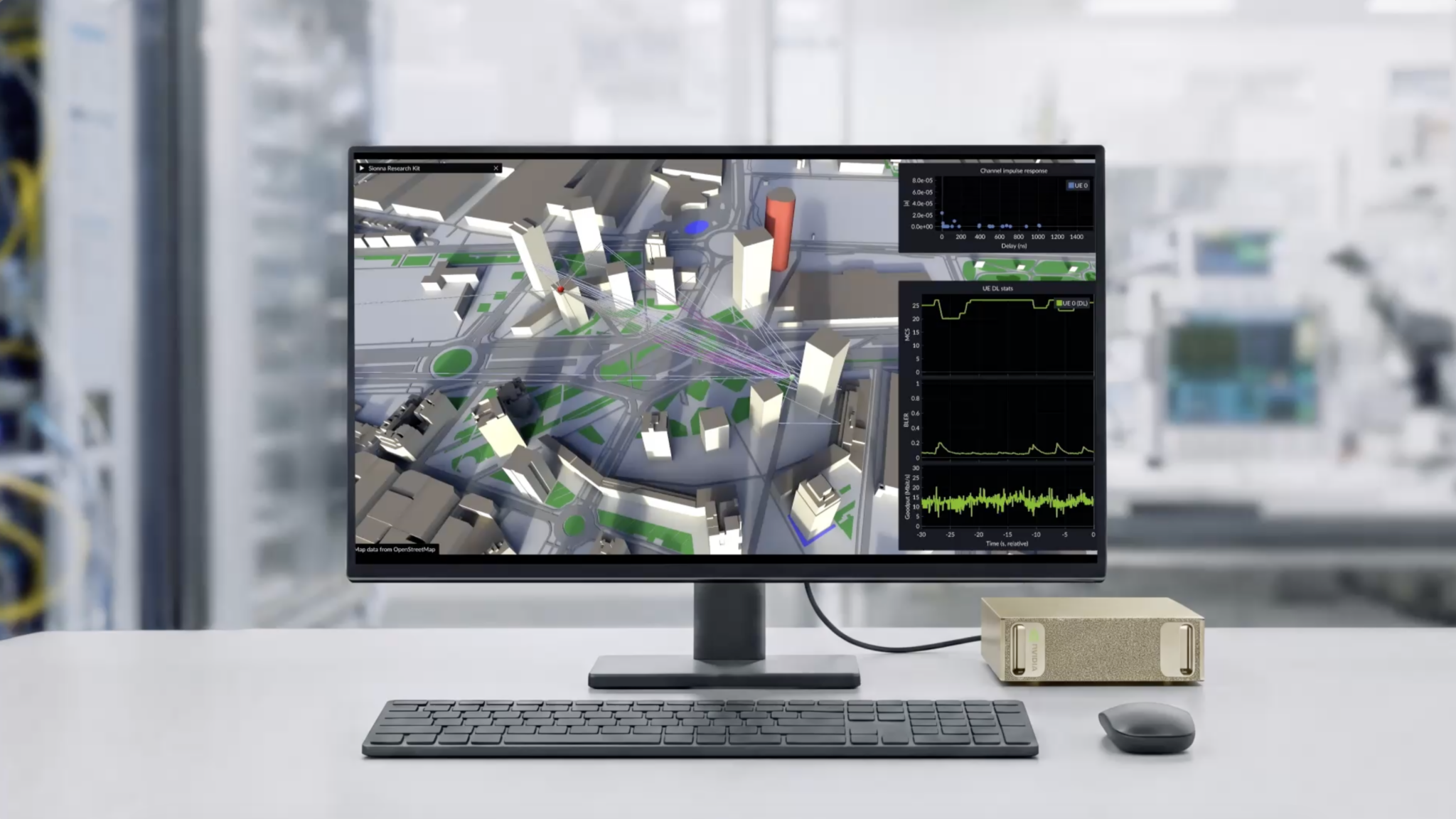
A year ago, NVIDIA open sourced its Aerial wireless software and Sionna, creating a suite of tools to accelerate 6G development. These tools bridge simulation, AI training, and real-world wireless experiments, enabling researchers to test ideas collaboratively. The platforms now support applications beyond data transmission, including improved signal reception, robotics connectivity, and real-time adaptation to device movement. Global adoption has surged, with downloads exceeding 1 million and over 8,000 research institutions using the software.
Researchers are exploring goal-oriented semantic communications to reduce latency in robotics. By transmitting compact descriptions of objects instead of full images, robots can respond faster in dynamic environments. At King’s College London, a robot arm connected to an NVIDIA Jetson AGX Orin running Sionna reduced task completion time by up to 52.6% in experiments, while improving resilience to dropped objects and potential collisions through digital twin validation.
AI receivers are improving wireless signal decoding in challenging conditions. SoftBank integrated a neural receiver into NVIDIA Aerial CUDA-Accelerated RAN, achieving up to 60% higher uplink throughput than conventional receivers in interference tests. ETH Zurich researchers further reduced block error rates by over one-third by tuning neural receivers with local measurements, demonstrating the potential for adaptive, environment-aware reception.
Energy efficiency in 6G networks is being addressed through AI-driven demand prediction. At the University of Leeds, a system forecasting network demand 10 minutes ahead guided base station sleep decisions, cutting power consumption by 45.6% while maintaining connectivity. Researchers validated the approach using a portable 5G network-in-a-box powered by NVIDIA DGX Spark and a digital twin, highlighting practical energy savings without service disruption.