Why Deploying Physical AI at Scale Demands Safety at Every Layer
NVIDIA introduces NVIDIA Halos, a full-stack safety system for physical AI, addressing safety across hardware, software, AI, and deployment to support autonomous vehicles and robotics at scale.
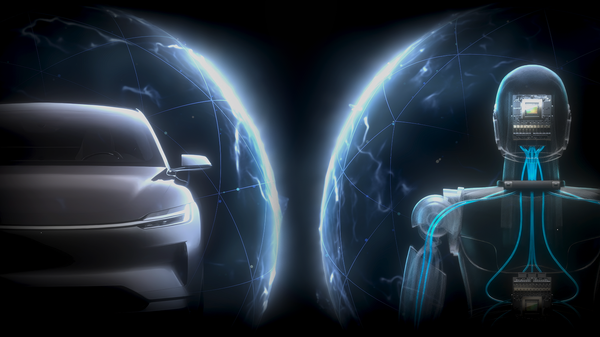
Physical AI systems such as autonomous vehicles and industrial robots are transitioning from research to large-scale deployment, with millions expected in operation by the mid-2030s. Ensuring safety requires continuous validation across hardware, software, AI behavior, and operating environments, not just initial testing. Developers must demonstrate how systems handle failures, functional limits, and AI-specific risks to meet regulatory and workplace safety standards. NVIDIA’s safety foundation builds on over a decade of autonomous vehicle safety work, integrating functional safety, sensor fusion, and AI behavior assurance into a cohesive approach.
NVIDIA Halos is introduced as the first full-stack safety system for physical AI, enabling developers to engineer safety across design, validation, and deployment layers. The system connects cloud-based AI development and simulation with real-world deployment, maintaining traceable safety evidence throughout the lifecycle. It supports both autonomous vehicles and robotics while tailoring platforms and standards to each domain. The NVIDIA Halos AI Systems Inspection Lab translates safety, cybersecurity, and AI safety requirements into repeatable inspections to prepare integrations for third-party certification.
Autonomous vehicle developers including Geely, Isuzu, Nissan (using Wayve software), and Einride are building level 4-ready vehicles on NVIDIA Hyperion with Halos OS support. Mobility providers such as Uber, Grab, and Lyft are using Hyperion to scale robotaxi development. The Halos AI Systems Inspection Lab includes members like AUMOVIO, Bosch, Gatik, Hesai, Lucid, MIRA, onsemi, PlusAI, Sony, Valeo, and Wayve, covering development, sensors, silicon, validation, and safety assurance.
In robotics, embedded software providers acontis and QNX support safety functions, while Advantech and NexCOBOT build safety-designed NVIDIA IGX systems. Semiconductor companies Infineon, NXP, STMicroelectronics, and Texas Instruments contribute sensor and safety-microcontroller technologies. KION Group is developing safety agents for autonomous forklifts, and Agility integrates NVIDIA IGX Thor and Halos Core into its humanoid robot safety system. Regulatory bodies including TÜV SÜD and TÜV Rheinland have conducted safety assessments and certifications for NVIDIA’s automotive and robotics platforms.