iBuyPower RDY Scale B06 review
The iBuyPower RDY Scale B06 offers a budget gaming PC with an RTX 5060 GPU and Intel Core Ultra 5 CPU, but its single-channel RAM and 1TB SSD limit performance despite a competitive price when discounted.
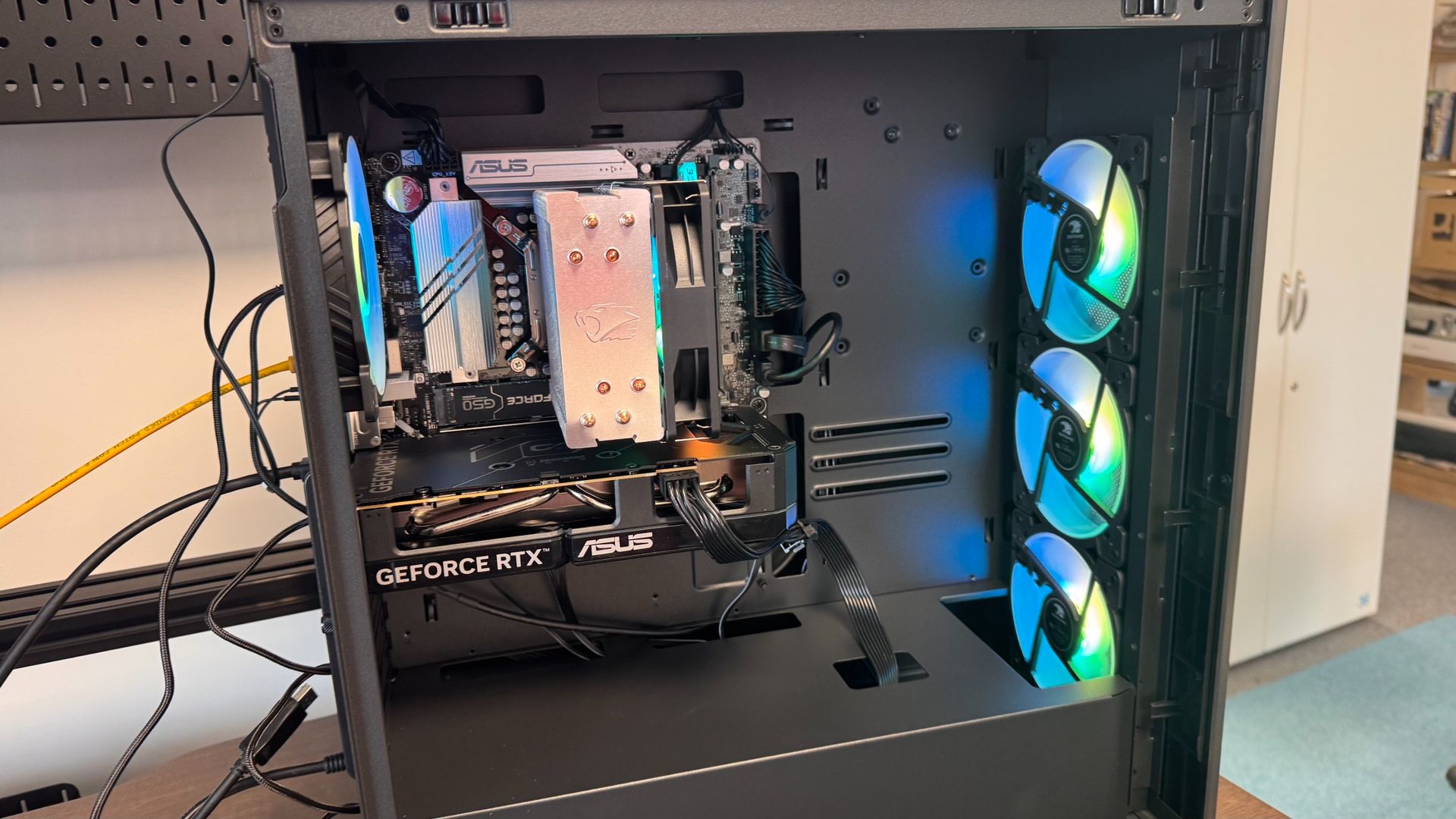
The iBuyPower RDY Scale B06 is positioned as a budget gaming PC, pairing an RTX 5060 GPU with an Intel Core Ultra 5 225F CPU. Its large case houses a single-channel DDR5 memory stick at 5200 MT/s and just 1TB of storage, which translates to around 952GB usable capacity after Windows and preinstalled apps. The system includes four USB 2.0 ports, four USB 3.2 Gen 1 Type-A ports, one USB 3.2 Gen 2 Type-A port, and one USB 3.2 Gen 2 Type-C port, alongside audio inputs and outputs. While the RTY Scale B06 is available for immediate purchase under iBuyPower's RDY preconfigured range, its hardware compromises—particularly the memory configuration and storage capacity—impact real-world performance.
The Scale B06’s RTX 5060 GPU delivers playable frame rates at 1080p and some 1440p gaming with upscaling, but it lags behind higher-tier RTX 5070 systems in benchmarks. Games like Avatar: Frontiers of Pandora and Cyberpunk 2077 struggle to reach 30 fps at 1440p Ultra without upscaling, while Metro Exodus maintains around 60 fps. The system’s single-channel memory and lower-capacity SSD further constrain performance, especially in CPU-heavy titles like Baldur’s Gate 3, where 1% lows remain nearly identical to a competing rig despite higher average frame rates.
At full MSRP, the Scale B06 is difficult to recommend due to its significant compromises, but iBuyPower frequently offers discounts that bring it closer to mainstream pricing. Recent sales have reduced its cost by several hundred dollars, making it a more competitive option for budget-conscious buyers. However, even with discounts, alternatives like the Acer Predator Orion 3000—featuring an RTX 5070 and better CPU—remain superior in gaming performance despite its own compromises.
The Scale B06’s memory configuration is a notable weak point, with a single DDR5 stick at 5200 MT/s and CAS latency of 40, limiting dual-channel bandwidth. Upgrading to 32GB would require finding an exact match for the existing stick, a challenge exacerbated by the ongoing memory crisis. The 1TB SSD, while standard for budget systems, quickly fills up with games and applications, leaving around 300GB free after installing benchmark titles.