Big Walk's AI Controversy Overshadows a Remarkable Creative Achievement
House House’s Big Walk, a praised multiplayer co-op game, faced backlash over AI-assisted coding, sparking debate about transparency and ethics in game development.
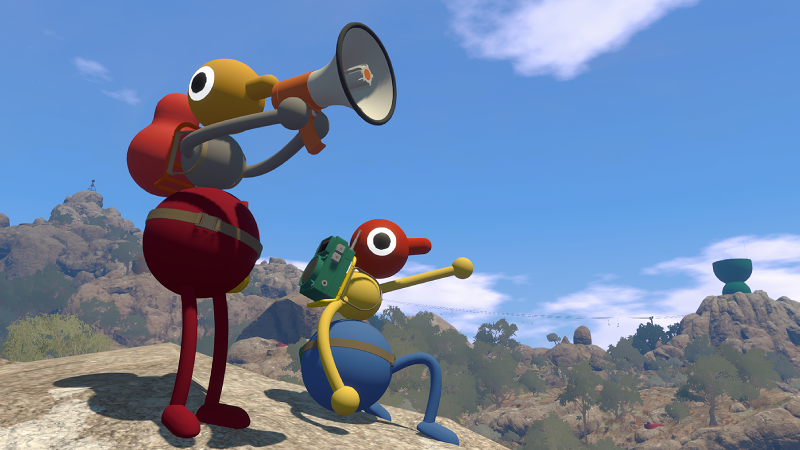
Big Walk began as a lockdown experiment by House House, the studio behind Untitled Goose Game, evolving from a simple chat tool into a sprawling multiplayer playground. The team initially aimed to test networking basics but discovered a unique magic in proximity voice chat that made shared space feel special. What started as a small prototype grew into a full game after early playtests revealed the potential of collaborative exploration and shared experiences.
The game’s development hit a technical wall when a lighting physics issue in Unity appeared unsolvable, with a Unity engineer stating the desired effect was impossible. To overcome this, the team turned to an LLM chatbot to generate code, allowing them to realize their vision. This workaround became a focal point of controversy when the Indie Game Festival jury announced they would not consider games using generative AI for this year’s awards.
The dispute over AI usage in Big Walk has ignited broader debates about ethical coding practices, disclosure requirements, and the role of AI in creative industries. Players and developers are grappling with how to interpret AI’s involvement in games, especially when its use is not immediately apparent. The controversy has highlighted the challenges faced by small studios balancing innovation with technical limitations.
Despite the backlash, Big Walk has been widely praised for its artistry and innovative approach to multiplayer co-op. Jake Strasser, co-founder and lead designer, emphasized the team’s focus on creating a truly shared experience, where collaboration and friction are central to the gameplay. The game’s evolution reflects a commitment to exploring new forms of interactive storytelling and player connection.