Steam’s Angriest New Game Is the Perfect Place to Channel Your AI Hate
Virtue and a Sledgehammer channels frustration with generative AI into a cathartic, story-driven game where Pratelle smashes robotic townsfolk to confront mortality and technological hubris.
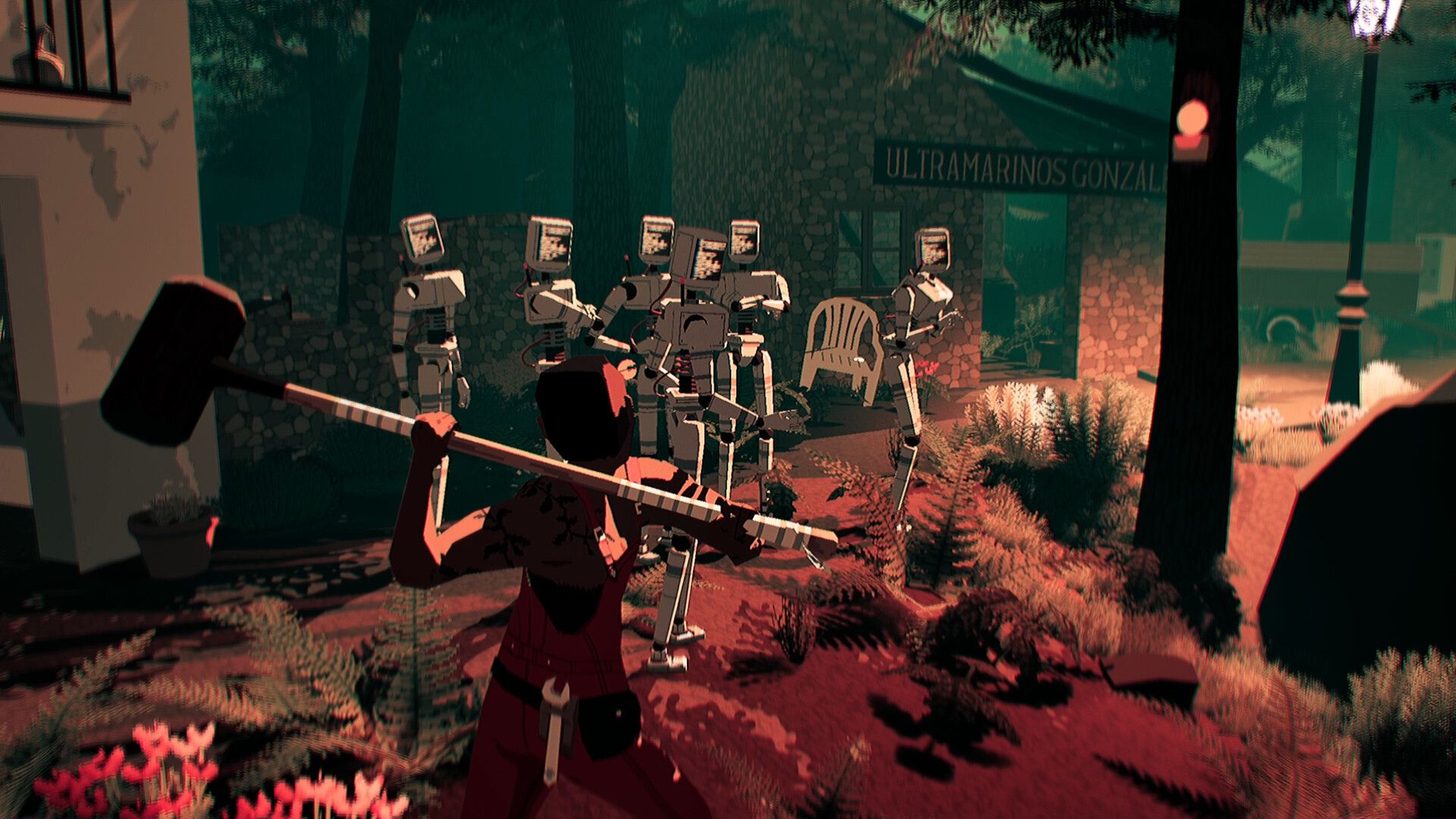
Virtue and a Sledgehammer, a three-hour narrative game from Deconstructeam and Selkie Harbour, follows Pratelle, a grieving protagonist who returns to her hometown to find its residents transformed into AI-controlled machines. Her mission is to destroy the robotic consciousnesses, including those of people she once knew, using a sledgehammer as her primary tool. The game’s mechanics emphasize raw, visceral destruction, with players able to swing the hammer to shatter bots and buildings, culminating in a Hulk-like smash capable of leveling entire structures. The sound design amplifies the impact, creating a cathartic experience that mirrors the game’s themes of rage and loss.
The game’s central conflict explores the ethical dilemma of transferring human consciousness into machines, a premise tied to Pratelle’s sister Nina, who believes immortality is achievable through technology. Pratelle rejects this idea, arguing that death is an inevitable part of humanity and that clinging to simulated life denies the reality of loss. The story draws parallels to Ridley Scott’s 1984 Apple commercial, framing the sledgehammer as a symbol of resistance against a dystopian future where technology erodes human essence.
Virtue and a Sledgehammer challenges players to confront uncomfortable questions about grief, acceptance, and the limits of human existence. As Pratelle destroys the robotic townsfolk, she—and the player—are forced to grapple with whether these machines truly house the thoughts and feelings of the people they once were. The game’s philosophical depth is underscored by its comparison to Yorgos Lanthimos’ Alps, which similarly examines the ethics of artificial substitutes for human connection.
The game’s conclusion reinforces the idea that humanity’s imperfections and mortality are not flaws but defining traits. Virtue and a Sledgehammer argues that the pain of loss is an essential part of what makes life meaningful, rejecting the tech industry’s push for immortality and efficiency. By embracing fragility and impermanence, the game posits that true humanity lies in accepting these realities rather than seeking to transcend them.