Guterres: ‘Cracks have become canyons’ as world faces four tests of power
UN Secretary-General António Guterres warned the General Assembly that humanity faces four critical tests—war, inequality, climate change, and AI—that will shape global cooperation or division.
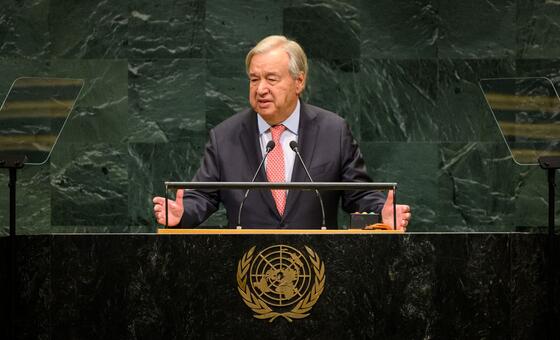
António Guterres told the UN General Assembly that the world confronts four decisive challenges—war or peace, inequality, climate change, and artificial intelligence—that will determine whether global relations move toward cooperation or deeper division. He framed these crises as interconnected struggles over how power is exercised and by whom, rather than isolated issues. Guterres emphasized that the greatest power lies not in domination but in building a future that benefits everyone, as outlined in his annual report.
The Secretary-General highlighted a decade of eroding international norms, including attacks on civilians, violations of international law, and declining trust between nations. He warned against the rise of rival blocs with separate economic and security systems, a scenario he has termed the Great Fracture. Guterres condemned ongoing conflicts in Ukraine, Gaza, Sudan, and Myanmar, calling ceasefires mere ‘lesser fires’ that continue to harm civilians, and reiterated calls for compliance with International Court of Justice orders regarding Gaza.
Guterres addressed systemic inequality, describing it as a power struggle over opportunity, resources, and self-determination. He criticized the international financial system for burdening developing nations with debt while they face climate disasters they did not cause. He called for faster debt relief, stronger multilateral development banks, and fairer access to IMF Special Drawing Rights. The UN chief also announced the organization had achieved full gender parity in senior leadership and professional roles for the first time in its history.
On climate change, Guterres described the crisis as the most profound intergenerational power imbalance, warning of a likely breach of the 1.5°C threshold. He demanded polluters pay and urged developed nations to triple adaptation funding, noting that major oil companies have profited since Russia’s invasion of Ukraine while adaptation finance for developing countries remains insufficient. He also warned that unregulated AI concentrates power in data and algorithms, calling for a multilateral risk management framework with independent oversight to prevent misuse.