Nepal floods: ‘Apocalyptic’ destruction signals wider climate threat across Himalayas
UN officials warn Nepal’s catastrophic Himalayan floods signal a growing climate threat across the region, as rebuilding remains stalled due to unstable terrain and destroyed infrastructure.
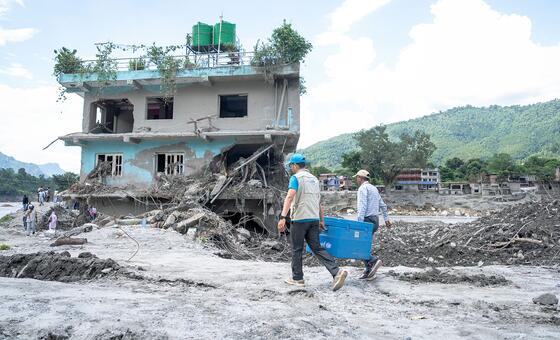
Catastrophic flooding in northern Nepal, triggered by a glacier collapse in late August, has killed over 1,200 people and displaced entire villages, with homes swept up to 150 metres from their original locations. UNOPS regional director Sara Netzer described scenes of total destruction, including a community where 400 homes and 1,200 people were obliterated by a wall of water and mud up to eight metres deep. Debris fields contain personal belongings alongside remains, underscoring the scale of loss and trauma experienced by survivors now sheltering in Nepali government holding centres. Adequate water, sanitation, and temporary shelter are urgently needed, particularly for children who have lost parents and face psychological distress without access to schools.
Reconstruction efforts are severely hampered as the river has permanently shifted course, leaving the unstable terrain unsafe for rebuilding. UNOPS has mobilized funding for engineering assessments, risk mapping, and bridge safety analysis, but only one of 40 bridges remains intact, cutting off communities and complicating humanitarian aid delivery. The World Food Programme has resorted to helicopter drops to reach isolated populations, highlighting the logistical challenges posed by the disaster. Netzer emphasized that the destruction surpasses even the devastation wrought by Nepal’s 2015 earthquake, with survivors already displaced by that earlier catastrophe now facing renewed loss.
The psychological and emotional toll on survivors is profound, as many have lost breadwinners and remain missing relatives, compounding grief with uncertainty. Netzer noted that affected communities had already endured displacement from the 2015 earthquake, yet the current crisis has erased any remaining sense of stability or normalcy. The lack of safe land for rebuilding and the absence of basic infrastructure further deepen the humanitarian emergency, leaving families in limbo. Survivors describe losing everything, including homes, livelihoods, and loved ones, with little clarity on when or if recovery is possible.
UNOPS warns that the scale and nature of this disaster signal a broader climate threat across the Himalayas, with similar risks likely to emerge in other vulnerable regions. Netzer cautioned that while Nepal faces immediate devastation, the underlying conditions—accelerated by climate change—could replicate this crisis elsewhere. The agency is prioritizing urgent assessments and temporary solutions, but long-term recovery remains uncertain given the ongoing instability of the landscape and the absence of clear rebuilding sites.