Red Sea nations step up maritime cooperation as regional threats grow
Red Sea and Gulf of Aden nations convened in Nairobi to enhance maritime cooperation amid rising regional threats, including piracy, smuggling, and disruptions to global shipping routes.
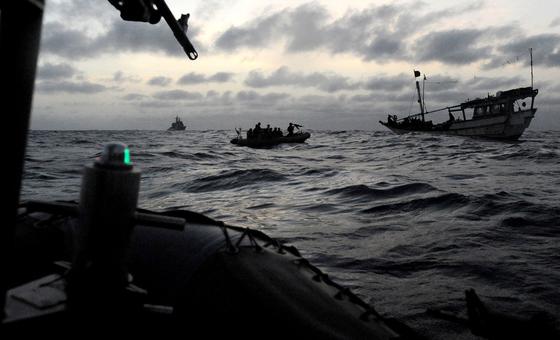
Countries bordering the Red Sea and Gulf of Aden are increasing collaboration to address shared maritime threats such as piracy, migrant smuggling, and disruptions to global shipping routes. A two-day dialogue in Nairobi, facilitated by the UN Office on Drugs and Crime (UNODC) with support from the EU, INTERPOL, IMO, and IGAD, focused on strengthening information-sharing and coordinated responses. Officials highlighted how regional instability, including attacks in the Strait of Hormuz, creates opportunities for criminal activity in adjacent waters, underscoring the need for unified action.
The Red Sea and Gulf of Aden serve as critical maritime corridors linking regional economies to global markets, where disruptions can affect supply chains and trade far beyond the region. According to UNODC’s Regional Coordinator Mostafa Elbanna, the area faces interconnected challenges including piracy, illegal fishing, human trafficking, and narcotics smuggling. While piracy has declined from its peak, officials emphasized that improved law enforcement, data collection, and regional cooperation are essential to maintaining maritime security and responding to evolving threats.
For landlocked Ethiopia, maritime security is vital to its economy, as most of its trade passes through Djibouti. Captain Kibru Mesfin of the Ethiopian Maritime Authority noted that disruptions to maritime routes increase costs, delay goods, and weaken export capacity. He called for stronger links between maritime authorities, coast guards, and law enforcement agencies to ensure trade flows smoothly, advocating for harmonized information-sharing systems among neighboring countries like Djibouti, Yemen, and Somalia.
Participants at the dialogue stressed that threats such as maritime terrorism, illegal fishing, and smuggling transcend national borders, requiring coordinated responses. Abdurrahim Muhammad Ali of the Djibouti Maritime Authority highlighted the need for closer cooperation to share intelligence from Yemen, Somalia, and Ethiopia, as criminal networks exploit regional instability. The meeting focused on improving maritime domain awareness, operational cooperation, and coordinated incident responses to protect seafarers, safeguard trade, and maintain stability along major shipping routes.