When a country goes underwater: Island States fight for their future
Small island nations face existential threats from rising seas, risking land loss and displacement, while pursuing legal and practical measures to preserve statehood and maritime rights.
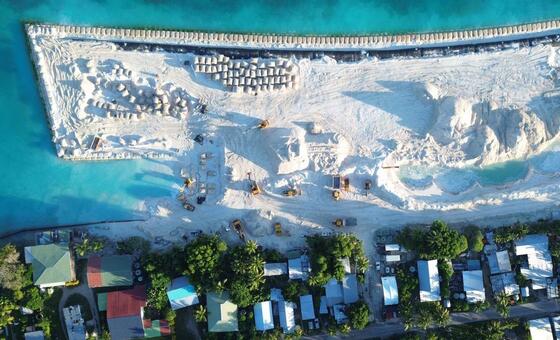
Rising sea levels and intensifying storms are eroding coastlines and submerging land in low-lying island nations, threatening millions with displacement and potential loss of habitable territory. For countries like Tuvalu, Kiribati and the Marshall Islands, which sit only about two metres above sea level, the threat is immediate and existential, raising questions about national survival and identity.
The UN’s World Meteorological Organization projects global sea levels will rise by at least 0.5 metres by 2100, with worst-case scenarios reaching two metres, intensifying risks for small island States already facing severe coastal erosion and land loss. Despite these threats, nations are determined to retain their sovereignty, nationality and cultural heritage, though existing legal frameworks do not fully address statehood continuity in the context of sea-level rise.
States have called for maritime zones and baselines established under the UN Convention on the Law of the Sea to remain fixed regardless of physical changes from rising seas, to preserve legal stability and prevent loss of resource rights. Marshall Islands President Hilda Heine emphasized at a 2024 UN meeting that affected States, which contributed least to climate change, will not accept ambiguous borders or resource exploitation.
The United Nations facilitates discussions on sea-level rise solutions, with the International Law Commission and International Court of Justice confirming strong State support for the continuation of statehood and confirming that UNCLOS does not require updates to baselines or maritime zone limits once established. Tuvalu is investing millions in coastal adaptation projects while developing strategies to preserve its geography, administration and culture amid potential territorial loss.