New net-zero community will become Michigan’s first virtual power plant
Michigan’s first residential virtual power plant will launch at Veridian in Ann Arbor, letting DTE Energy remotely tap stored solar power from 100 homes to ease grid strain and reduce costs.
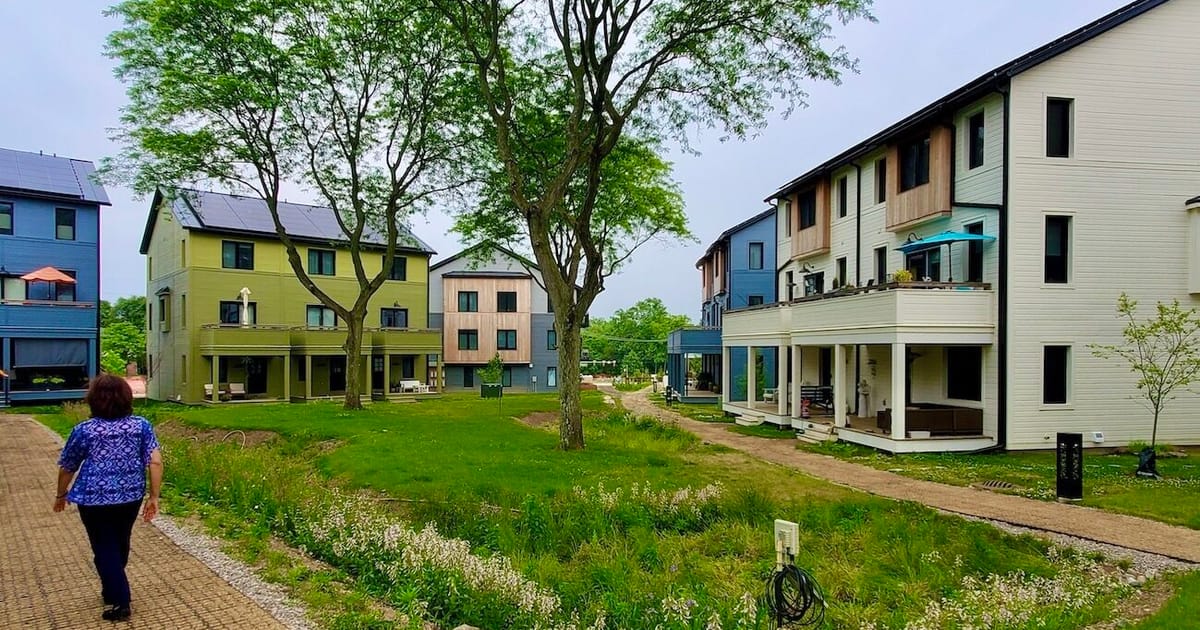
Mitch Hall and his wife Lori live in Veridian at County Farm, a net-zero-energy development in Ann Arbor where homes generate as much solar power as they use, aided by batteries. Their household will join Michigan’s first residential virtual power plant pilot, allowing Detroit-based utility DTE Energy to remotely dispatch stored solar energy from participating homes when grid demand peaks. DTE will compensate residents for sharing their battery power, managing the system automatically to avoid requiring homeowners to adjust settings or optimize usage. The utility has not disclosed exact payment amounts ahead of the pilot’s launch.
The pilot aims to test whether virtual power plants can lower costs and improve reliability compared with building new grid infrastructure or relying on fossil-fuel peaker plants. Utilities often lack incentives to adopt such programs, and high upfront costs for solar and batteries have limited widespread use. However, rising electricity demand from electrification and data centers is accelerating interest in distributed energy resources like VPPs.
Veridian’s pilot will include nearly 100 battery-equipped homes, with 44 market-rate solar and battery homes already built and 50 affordable units without batteries planned. Battery manufacturer Sonnen USA is providing the storage systems and proprietary software to operate the pilot, which can deliver up to 300 kilowatts for three hours. The project will help DTE assess the fleet’s actual power output and timing to inform future scaling.
The initiative builds on a similar Sonnen-facilitated pilot at Soleil Lofts in Utah, which expanded from 600 units in 2017 to over 7,900 homes and businesses in the Wattsmart Battery program. Experts say utilities can learn from such models to integrate residential batteries more quickly, though some prefer cautious pilot phases to refine operations before broader rollouts.