Training the world’s future quantum experts – Home
CERN and the Open Quantum Institute hosted a three-day hackathon in July 2026, uniting 34 international students to apply quantum computing to real-world challenges in materials science, energy, and healthcare.
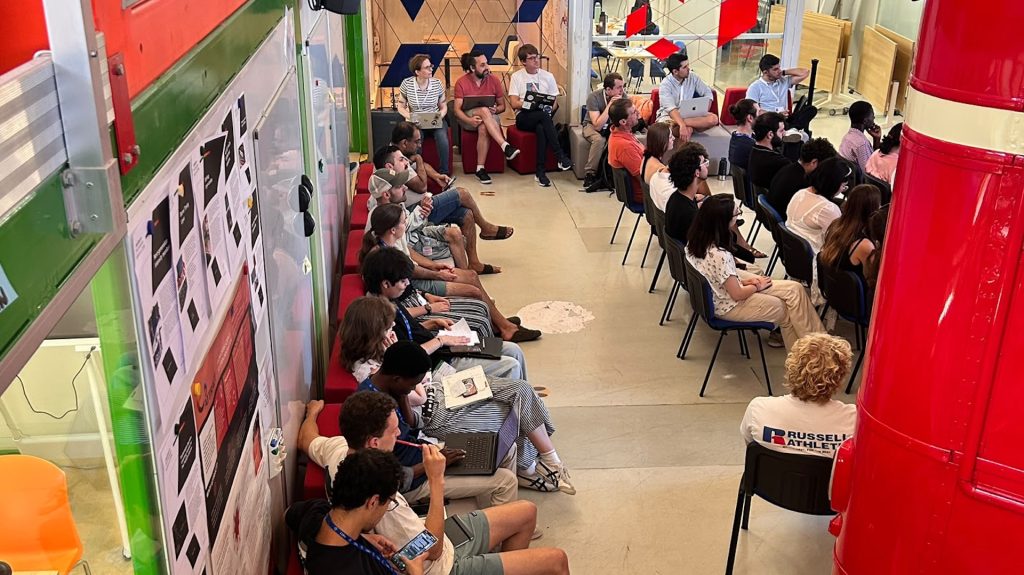
From 10 to 12 July 2026, CERN and the Open Quantum Institute (OQI) hosted the second edition of the Quantum Materials Hackathon, bringing together 34 students from over 30 nationalities. Participants used quantum computing hardware and simulators to address practical problems under the guidance of mentors from industry and research. The event focused on quantum materials, which are critical to technologies like superconducting magnets at CERN and have broader applications in clean energy, health, and resource management.
Each team worked on challenges proposed by industry or research partners, exploring topics such as materials with minimal electrical resistance, solar technologies without scarce or toxic components, and quantum simulations for complex materials. The hackathon was organized by CERN’s Stakeholder Engagement Group, Quantum Technology Initiative, and openlab teams, alongside the OQI, Quantum4Purpose, and Sparkboard, with additional support from BasQ and Pascal.
For many participants, including Elliot Amponsah from Ghana’s Kwame Nkrumah University of Science and Technology, the event marked their first experience running code on a real quantum computer. Amponsah’s team tested models to predict drug dissolution using small datasets, observing how algorithms handled real-world noise on quantum hardware.
The hackathon was designed to connect global talent with Swiss universities and local materials science expertise, offering participants skills and professional networks for future careers. It aligns with CERN’s annual summer student programme, which brings university students to the Laboratory to gain hands-on experience in advanced research.