Positrons pass test for the Future Circular Collider – Home
CERN’s Future Circular Collider positron-source concept has passed a key test at the Paul Scherrer Institute, demonstrating feasibility for the proposed 91-km collider.
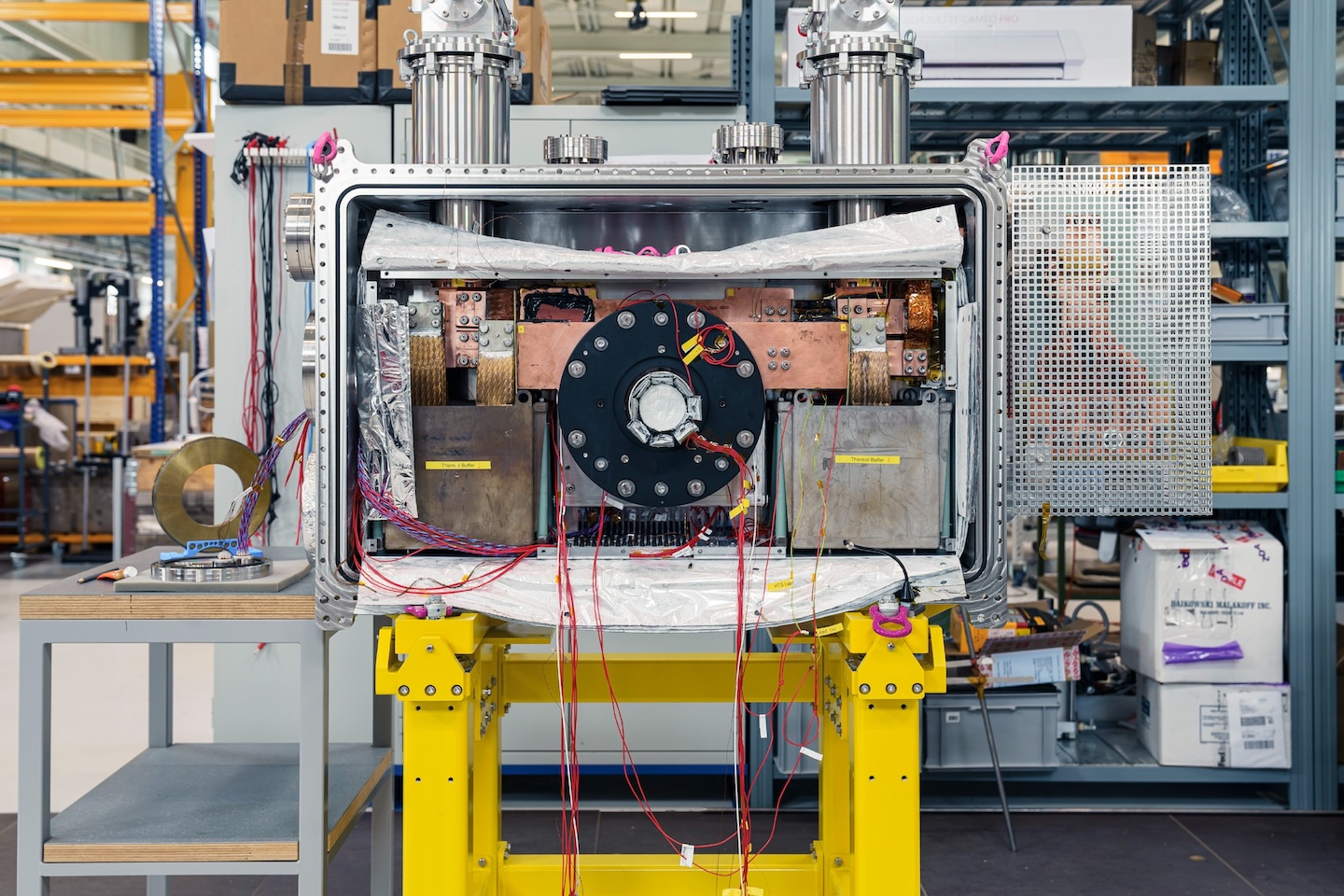
An experiment at the Paul Scherrer Institute (PSI) in Switzerland has successfully produced, captured and transported positrons using a system developed for CERN’s proposed Future Circular Collider (FCC). The results confirm that the FCC’s positron-source concept can function as an integrated system, marking a significant technical milestone for the project. Researchers used a tungsten target struck by electrons from the SwissFEL light source to generate positrons, which were then captured and guided by a superconducting magnet. The system’s performance aligns with the stringent requirements for the FCC, which aims to collide electrons and positrons for precise measurements of the Higgs boson and related particles.
The FCC is a proposed 91-kilometre research infrastructure intended as a successor to CERN’s Large Hadron Collider (LHC) in the 2040s. Unlike the LHC, which collides protons, the FCC would collide electrons and their antimatter counterparts, positrons. This approach would enable highly detailed studies of fundamental particles, including the Higgs boson, and address unresolved questions about the Universe. One of the project’s major technical challenges is the positron source, which must efficiently produce, capture and channel positrons into a tight beam for collisions. The PSI experiment demonstrated that these requirements can be met using advanced superconducting magnet technology and novel beam handling components.
The positron production system, known as P³, was developed collaboratively by PSI and CERN, with contributions from IJCLab–Université Paris-Saclay and KEK. A key innovation was a compact magnet made from high-temperature superconductors, capable of generating a magnetic field of around 15 tesla. Additional components, including radiofrequency cavities, were used to accelerate and bunch the positrons for efficient transport. The successful integration of these elements confirms the feasibility of the FCC’s positron-source design. The project also received support from the Swiss CHART programme, which has helped advance the expertise and technologies needed for the FCC.
The next phase for the P³ team involves increasing beam intensity and scaling up positron production to meet the FCC’s operational requirements. The high-temperature superconducting magnet technology developed for this experiment is also being explored for applications in proton therapy and fusion research. A decision on the FCC’s future is expected from the CERN Council in 2028, following assessments of scientific, technical and financial feasibility, as well as public consultations in France and Switzerland.