Crypto Payments Do Not Keep Banking Hours. Here Is the Shape of the Day
Analysis of 1.6 million crypto payments over a year shows 68% occur outside traditional banking hours, with no hour left idle and weekends accounting for nearly a quarter of transactions.
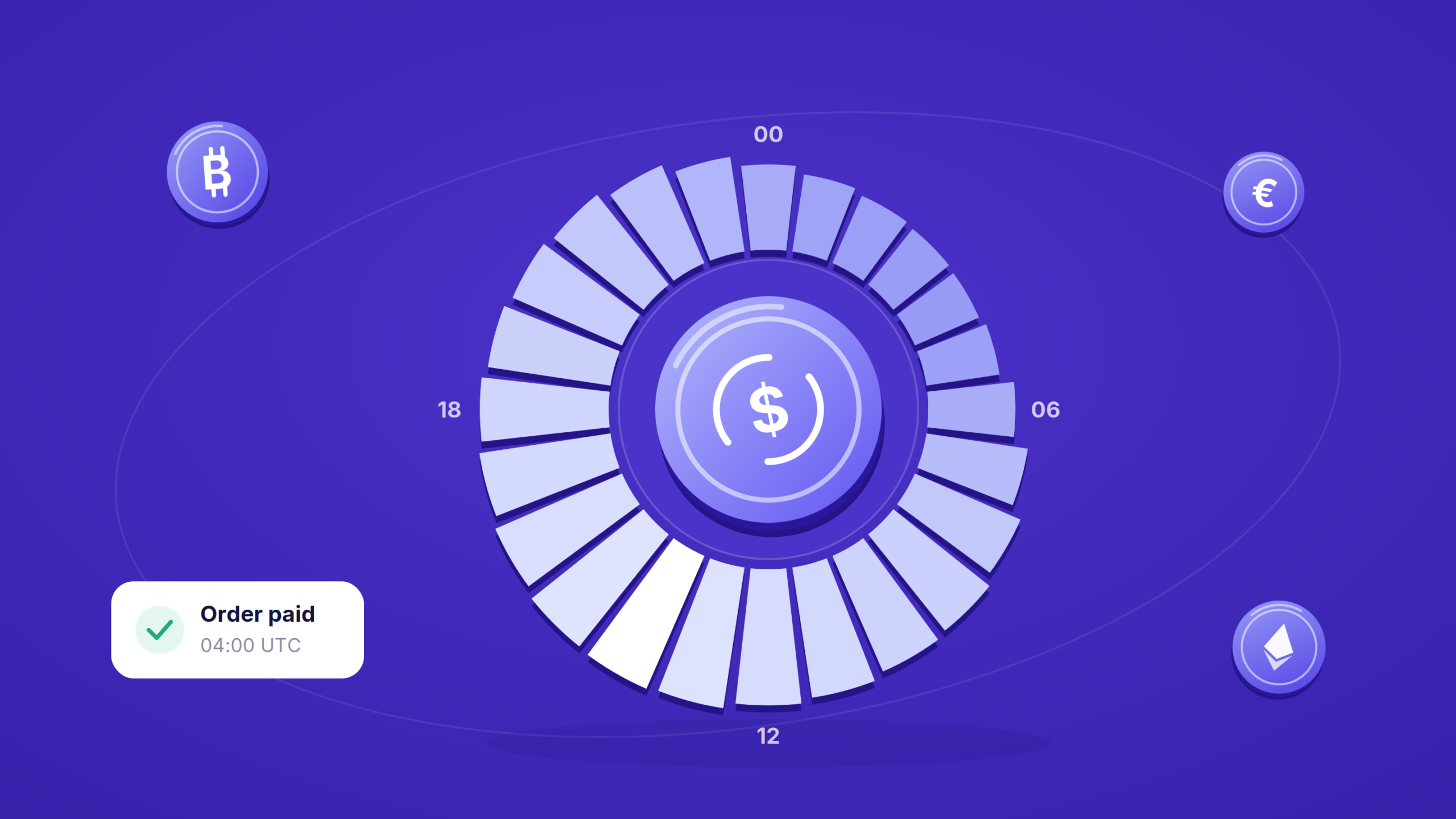
Crypto payments operate around the clock, defying standard banking schedules. A study of 1,598,649 paid orders between September 2025 and August 2026 found that only 32% of transactions occurred during typical business hours (Monday to Friday, 08:00–16:00 UTC). The remaining 68% happened outside these hours, highlighting the global, non-stop nature of digital currency transactions.
The data reveals a remarkably even distribution of payments throughout the day. The busiest hour, 14:00 UTC, accounted for 5.63% of all orders, while the quietest hour, 04:00 UTC, still processed 2.40%. This represents a peak-to-trough ratio of 2.35, indicating a steady flow of activity rather than sharp fluctuations tied to business cycles.
Weekdays followed a predictable pattern, with Monday being the busiest and volume declining steadily toward Friday. However, weekends defied expectations, contributing 21.5% of the year’s total payments—despite standard banking systems being closed. Saturday and Sunday each carried 78.5% of a weekday’s volume, underscoring the persistent demand for crypto transactions even when traditional systems are inactive.
When adjusted for local time zones, the data showed that 4.54% of payments occurred in the hour after midnight for shoppers, compared to 3.53% in the hour after 9am. This shift reveals that while geography shapes the timing of transactions, the overall 24-hour availability of crypto payments remains unchanged, with no hour left without activity.