Crypto Wallets for Business: Custodial, MPC, Multisig or Hardware?
Businesses must choose between custodial, MPC, multisig, or hardware crypto wallets based on control, team needs, and transaction frequency.
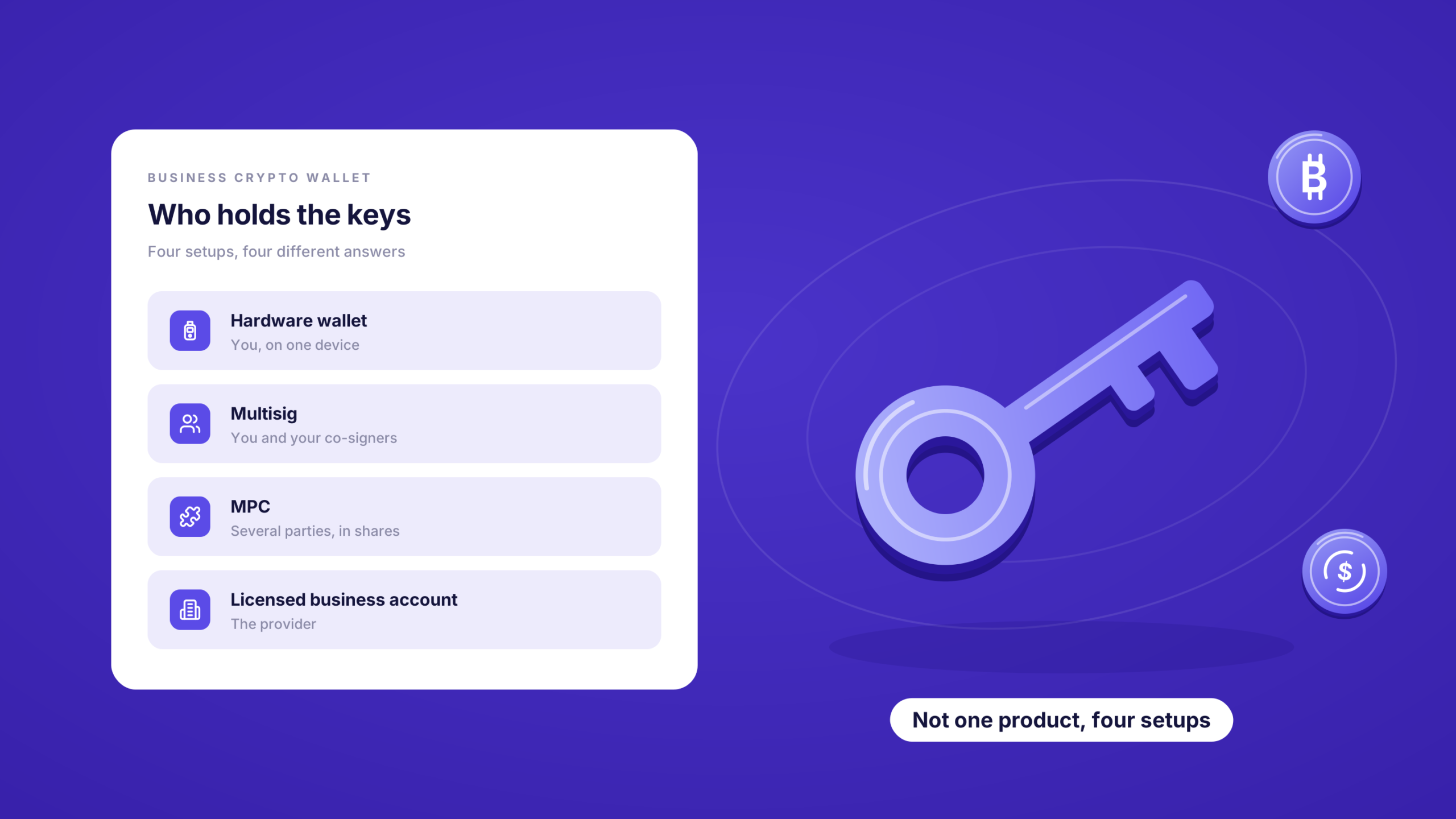
A personal crypto wallet is unsuitable for business use because it lacks shared access, recovery options, or accounting support. Business wallets come in four distinct setups—custodial, MPC, multisig, or hardware—each addressing different operational needs. The choice depends on factors like transaction volume, team involvement, and whether funds are held long-term or used as working capital. CoinGate emphasizes that no single wallet type suits all businesses, requiring careful evaluation of practical requirements.
Hardware wallets provide offline key storage with transaction approval on the device, but they typically limit access to one person, making team collaboration difficult. Multisig wallets require multiple keys for transactions, preventing unauthorized moves and reducing lockout risks, though they require chain-specific support and manual accounting. CoinGate notes that multisig is best for teams prioritizing shared control over day-to-day payments.
Multi-party computation (MPC) splits a single key into shares held by different parties, enabling joint signing without reconstructing the key. This method avoids on-chain visibility and network-specific limitations but relies on the provider’s technology and policies. CoinGate highlights MPC as ideal for operations moving significant value across multiple networks, though it requires technical setup and provider trust.
Custodial accounts, such as CoinGate’s business account, are regulated and include features like user roles, approvals, statements, and fiat settlement. Authorized under MiCA by the Bank of Lithuania, these accounts suit businesses using crypto as working capital rather than long-term reserves. CoinGate advises that if self-custody is a principle, a custodial account may not be suitable, recommending a hybrid approach where operational balances are held with a provider and reserves in self-custody.