How Agencies Invoice International Clients in Crypto
Agencies can invoice international clients in crypto while keeping books in euros, with settlement in minutes and fees starting at 1%. The process involves creating payment pages, managing expiry windows, and handling retainers manually.
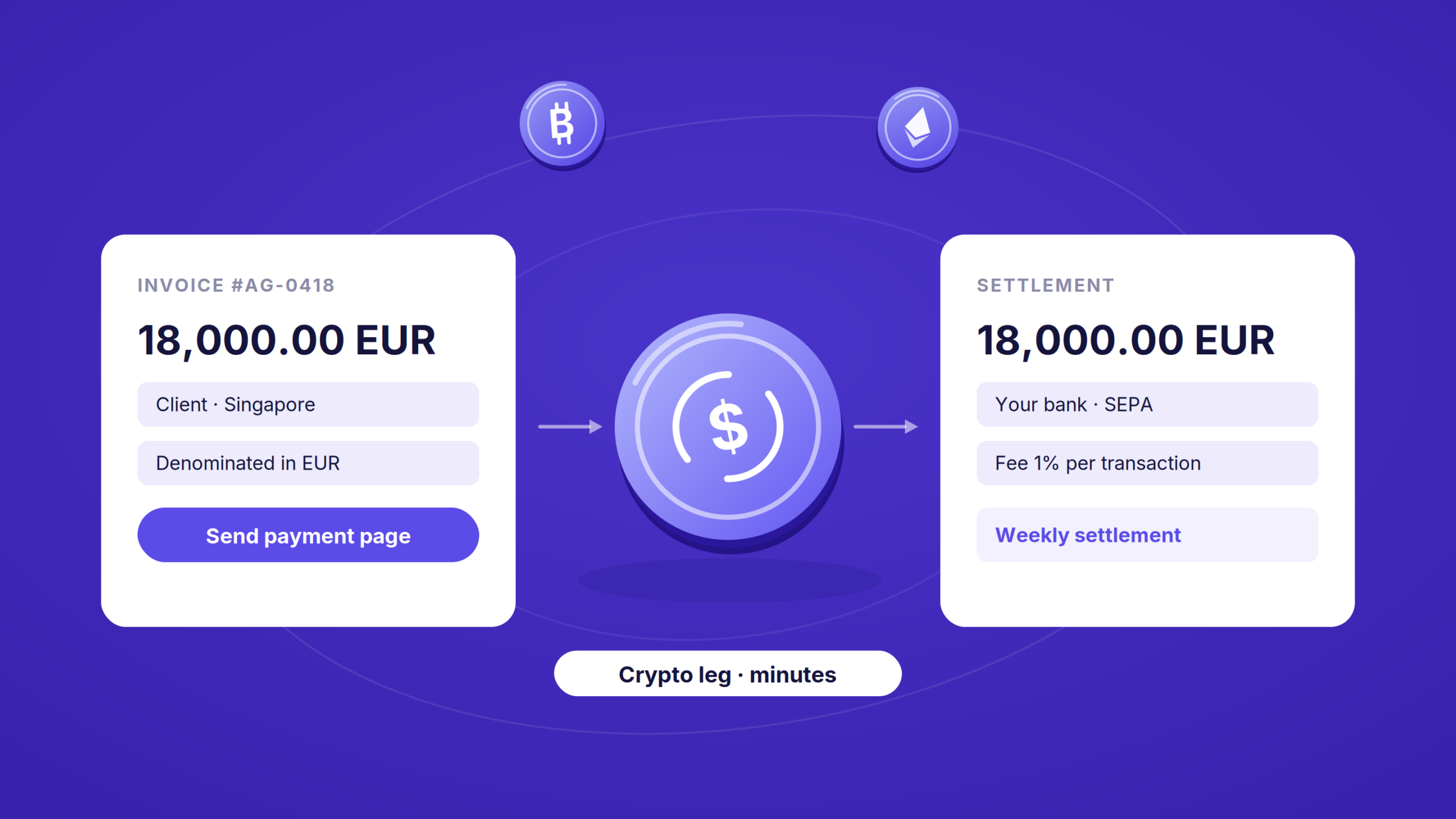
Agencies can issue invoices in euros while allowing clients to pay in one of eleven supported cryptocurrencies, with the crypto leg converting to euros within minutes. The invoice amount is quoted in euros, and the client selects an asset and network at checkout, with no requirement for a CoinGate account. The payment page includes a two-hour window for currency selection and a 20-minute window for completing the transfer, both of which must be communicated clearly to the client to avoid missed payments.
Fees for processing payments are 1% under the Standard plan, with no monthly, setup, or integration fees listed for either plan. Fiat settlement is available in USD, EUR, and GBP via SEPA or SWIFT, while on-chain settlement options include USDC or EURC, each with specific network availability. Settlement occurs weekly for Standard plan users, with Enterprise clients able to request faster or customized payout schedules, though no guaranteed settlement date is published.
Invoices must be paid in full and cannot be settled in increments, meaning milestone-based or retainer agreements require separate invoices for each payment. Each invoice has a default 30-day expiry, which should align with the payment terms agreed with the client to prevent links from expiring prematurely. Retainers operate on a recurring invoicing basis, generating new invoices on a weekly or monthly cadence, but do not auto-charge, requiring manual follow-up on unpaid invoices.
The invoicing process is managed through a dashboard, with an API available for integration with existing project systems. The product is primarily targeted at service providers and agencies, offering a straightforward way to handle international payments without the delays and hidden fees common in traditional wire transfers. The system emphasizes transparency in timing and fees, though it requires active management of retainers and expiry dates to avoid cash flow issues.