A new deep learning model maps global methane emissions from space.
Google and NASA’s Jet Propulsion Laboratory developed MAPL-EMIT, an AI model using NASA’s EMIT instrument to detect global methane emissions from space, identifying 23,000 additional plumes including 24 of the world’s largest landfills.
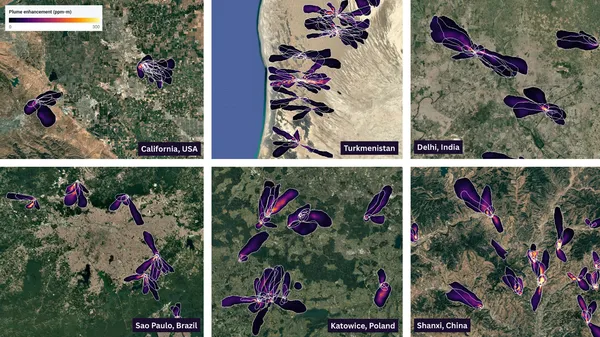
A new deep learning model called MAPL-EMIT, developed by Google and NASA’s Jet Propulsion Laboratory, uses NASA’s EMIT instrument to track methane emissions globally from space. The model addresses a longstanding challenge in methane detection by analyzing data from millions of simulated plumes to identify sources that were previously difficult to pinpoint.
Methane is a potent greenhouse gas with a warming potential 30 times greater than carbon dioxide over a century. MAPL-EMIT improves detection by identifying 50% more methane plumes than human experts, including over 23,000 additional plumes worldwide. The model’s ability to locate these sources at scale supports faster and more targeted climate mitigation efforts.
The research team trained MAPL-EMIT on 3.6 million physics-simulated methane plumes to improve accuracy in complex environments. The model successfully identified 24 of the world’s 25 largest landfills as methane emitters, demonstrating its capability to detect major sources of emissions.
Google has made the global methane plume database publicly available on Earth Engine, along with an interactive visualization app. Open-source models and inference tools have also been released on Kaggle and GitHub to assist researchers, policymakers, and industry operators in using the data for climate action.