Europe’s AI moment: turning investment into impact
European organisations are increasing AI investment but struggle to move pilots into production, prompting demand for validated use cases and trusted infrastructure to ensure secure, scalable deployment.
Across Europe and the Middle East, 93% of organisations plan to raise AI investment by 2026, yet fewer than half of proofs of concept progress to production, highlighting a gap between ambition and operational readiness. Many firms are still refining AI governance frameworks despite 99% recognising data sovereignty as a long-term priority. Lenovo’s AI for All vision addresses this by combining proven use cases with infrastructure and expertise to deploy AI across devices, edge environments, private clouds and data centres.
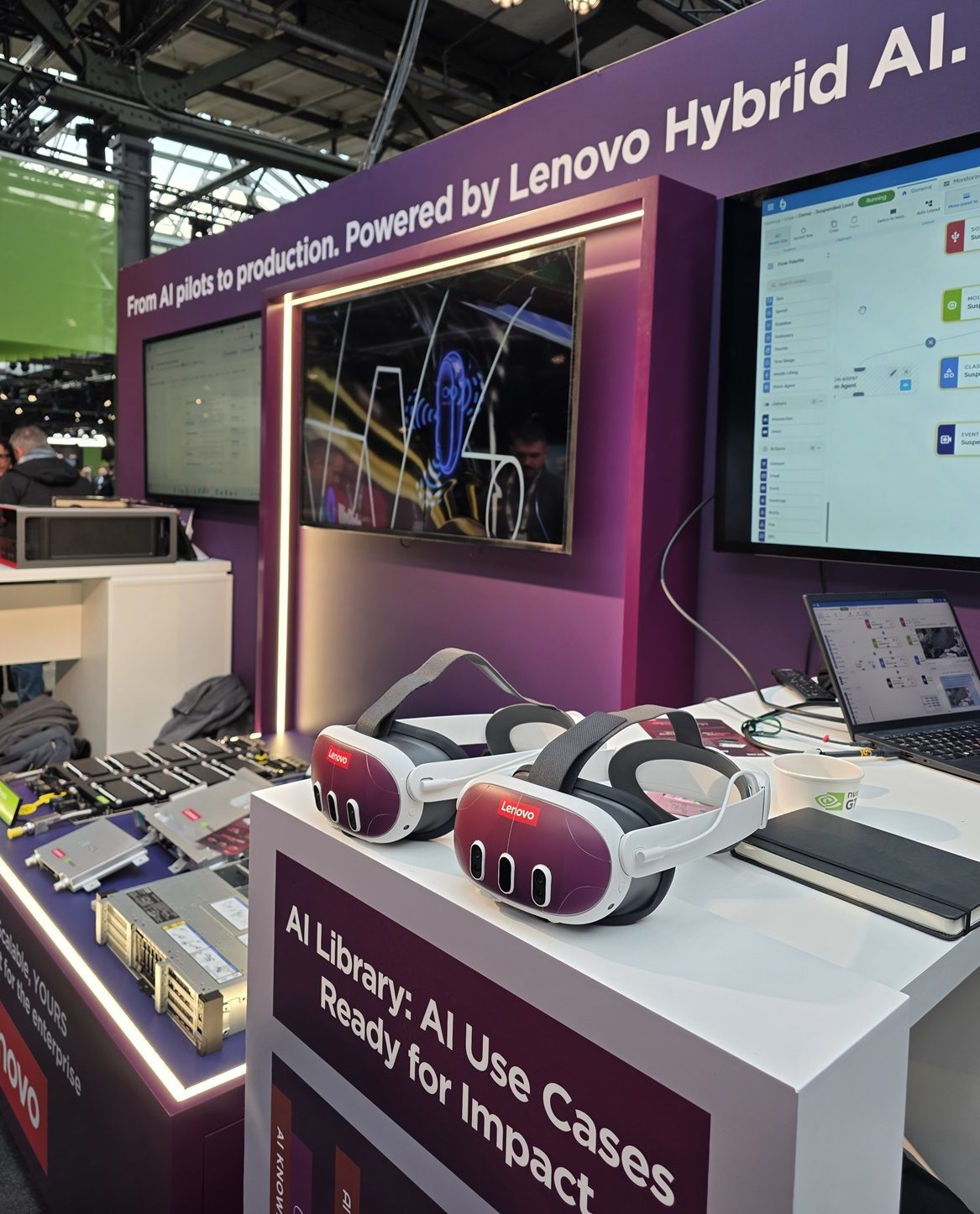
CIOs are shifting focus from model accuracy to cost, latency, governance and compliance when evaluating AI investments, requiring a predictable path from requirement to deployment. Lenovo’s AI Library offers production-ready agents and validated use cases—such as enterprise assistants, retail agents and computer vision—that integrate infrastructure, software and services to accelerate time-to-value, with selected deployments reaching production in as little as one week.
Data sovereignty is becoming a competitive necessity for European organisations, with 88% of IT decision-makers prioritising it due to regulatory obligations and intellectual property protection. Sovereign AI Factory solutions from Lenovo, IBM and NVIDIA enable customers to retain control over AI environments, combining hybrid AI infrastructure, an integrated data layer and production inference software to meet data-residency requirements.
Physical AI is expanding AI’s role beyond digital tasks into manufacturing, warehouses and mobility, where reliability and safety are critical. Lenovo’s Physical AI solutions—including the AD1 Level 4 autonomous-driving platform—support deployable systems for computer vision, robotic inspection and vehicle computing, helping organisations transition from demonstrations to operational improvements in real-world environments.