CHAPEA Mission 2 Crew Reflects After 378 Days on Simulated Mars
Four volunteers completed NASA’s second yearlong Mars simulation, emerging after 378 days in isolation to advance human spaceflight research and mission planning.
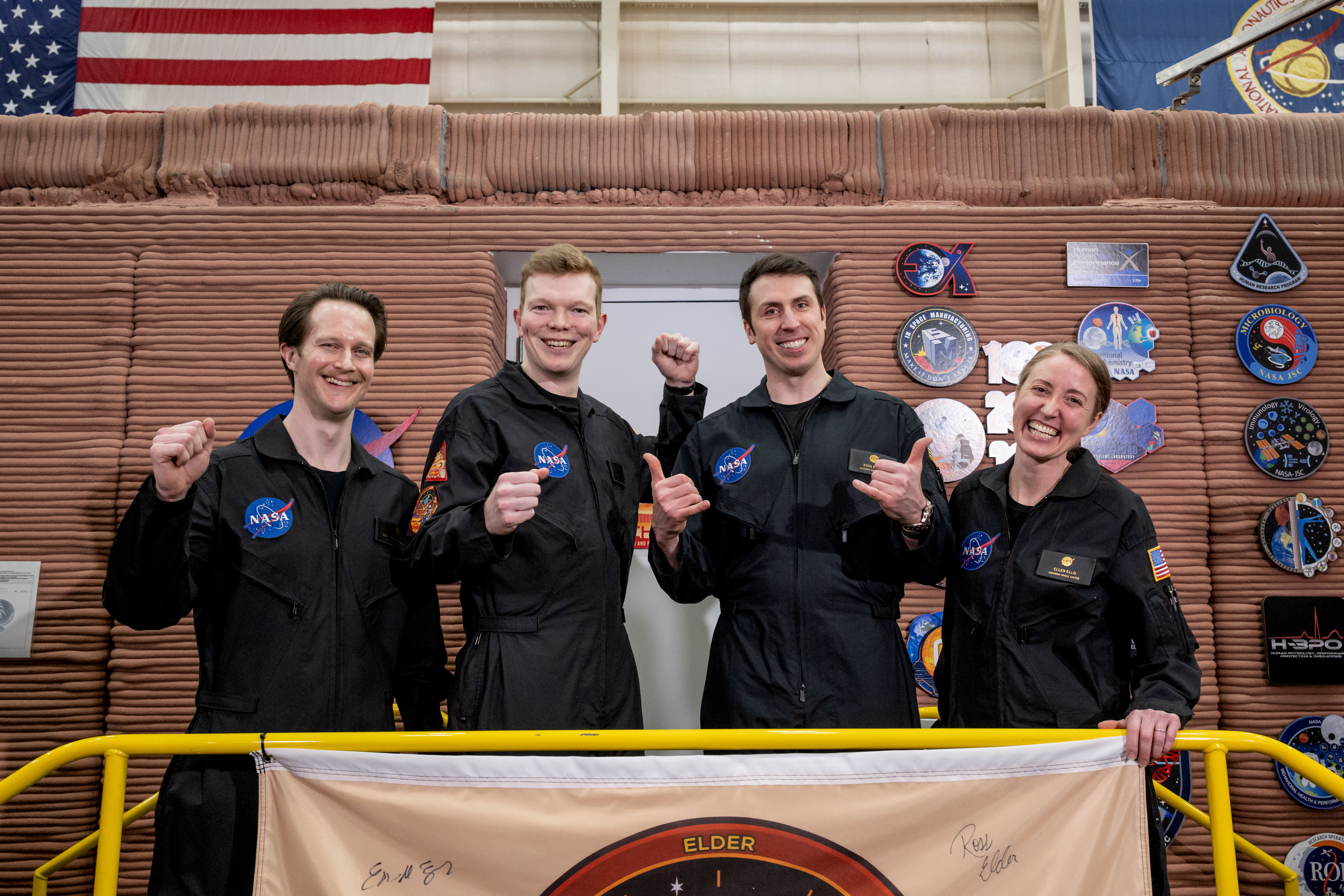
Four research volunteers concluded NASA’s CHAPEA Mission 2 after 378 days inside a 1,700-square-foot, 3D-printed habitat at Johnson Space Center, marking the agency’s second yearlong Mars surface simulation. The crew conducted simulated Marswalks, habitat maintenance, crop cultivation, and robotic operations while managing communication delays and limited resources. NASA leadership emphasized the mission’s role in preparing for future lunar and Martian exploration by gathering critical health and performance data.
NASA astronaut Jack Hathaway highlighted the crew’s resilience during their isolation, noting they completed their mission while Artemis II astronauts traveled around the Moon and a crew returned from a 237-day space station mission. Supported by ground teams, the CHAPEA crew navigated 22-minute communication delays and resource constraints, collecting data to inform future mission planning. Their work included remotely operating drones and rovers to survey terrain and collect samples.
Crew leader Ross Elder, a U.S. Air Force experimental test pilot, described the simulated Marswalks as comparable to flight operations, emphasizing the physical preparation needed for future explorers. He praised the team’s cohesion, calling it one of the finest groups he had experienced. Medical officer Ellen Ellis, a U.S. Space Force officer, organized biological sample collections and stressed the discipline required for health research procedures.
Crew member James Spicer, with satellite communications experience, managed habitat systems and consumables while noting the mission’s resemblance to living on a submarine. Matthew Montgomery, with expertise in robotics and agriculture, contributed to 3D printing capabilities and a seed-germination experiment using simulated Martian soil.