Silver-nickel contacts cut TOPCon rear metallization costs by 11%
A Chinese research group reduced TOPCon solar cell rear metallization costs by 11% by partially replacing silver with nickel in screen-printed contacts, maintaining near-identical efficiency.
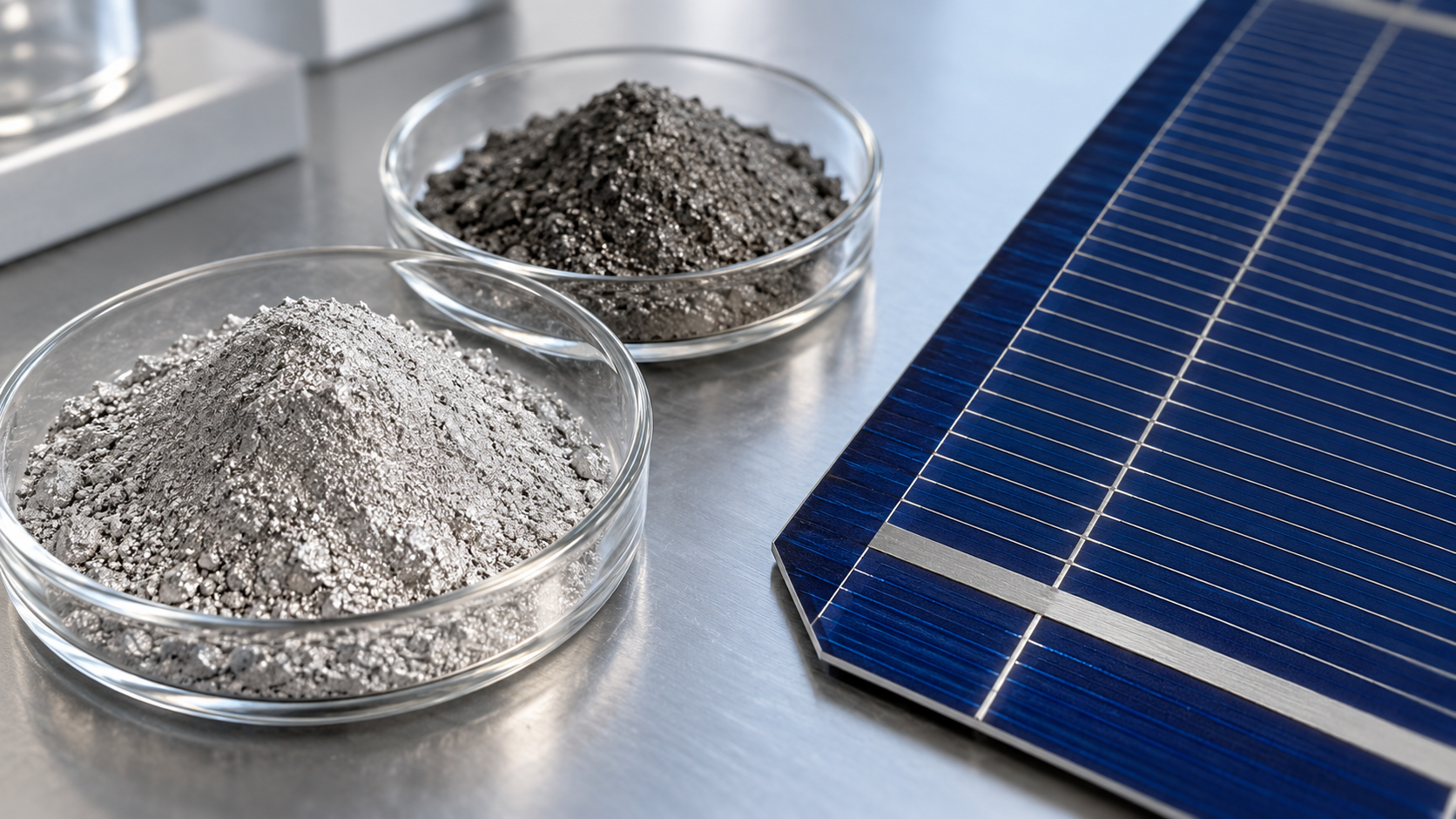
A team of researchers from Yangzhou University, Jiaxing University, and Changzhou University in China evaluated screen-printed silver-nickel (Ag-Ni) rear contacts for tunnel oxide passivated contact (TOPCon) solar cells, testing nickel concentrations from 6% to 60% by weight. The study aimed to address rising silver costs, which have become the second-largest expense in solar cell manufacturing due to increased demand and price pressures. Silver-based metallization remains critical for high-efficiency cell architectures like TOPCon and heterojunction technologies, prompting exploration of lower-cost alternatives.
The scientists fabricated TOPCon cells using 182 mm × 182 mm, 100 μm-thick precursors, screen-printing rear contacts with Ag-Ni pastes under identical conditions. After firing at peak temperatures of 711°C (front) and 660°C (rear), they measured performance using current density-voltage and Suns-Voc methods, alongside contact and grid-line resistivity tests. Results showed efficiencies of 26.26%, 26.21%, 25.86%, and 26.67% for nickel concentrations of 6%, 10%, 15%, and 30%, respectively, while 60% nickel sharply reduced efficiency to 6.88% due to electrical resistance and recombination losses.
The paste with 10% nickel was identified as the optimal balance between cost and performance. Further optimization adjusted silver powder composition and glass frit properties to enhance particle packing and firing compatibility. In a production trial of 219 cells, the optimized Ag-Ni paste achieved an average efficiency of 26.67%, compared to 26.77% for 215 reference cells using conventional silver paste.
The researchers reported that replacing 10% of silver with nickel reduced silver consumption to approximately 8 mg/W and cut rear-side metallization costs by about 11% when accounting for paste formulation, manufacturing complexity, and potential yield impacts. Their findings were published in Progress in Photovoltaics: Research and Applications, highlighting the potential for silver-lean metallization in sustainable PV growth.