"It just seemed arbitrary, and not very smart": EA was never a responsible owner for Bioware, but the developer never seemed to learn from their mistakes
Electronic Arts has closed Bioware after 19 years, ending series like Dragon Age and Mass Effect, amid longstanding tensions over corporate mismanagement and studio missteps.
Electronic Arts announced the closure of Bioware, the veteran RPG developer behind franchises such as Dragon Age and Mass Effect, ending a nearly two-decade ownership marked by persistent friction. Former staff describe how EA’s acquisition immediately altered Bioware’s culture, replacing creative language with corporate terminology and imposing abrupt budget cuts that constrained development. These changes were noted by audio design lead Steve Sim, who observed a shift from practical project requests to corporate phrasing like 'resources' instead of 'people.'
Bioware co-founder Trent Oster recounted EA’s initial cost-cutting measures upon acquisition, including a 10% budget reduction, contradicting expectations of increased support. This pattern of arbitrary cuts persisted, culminating in multiple layoffs in 2023 and 2025, framed as efforts to 'reimagine' the studio’s workflow. The impact of these decisions was evident in projects like Anthem, a live-service game that struggled due to shifting executive demands and a lack of clear vision.
Longtime Bioware writer David Gaider described Anthem’s development as driven by a 'sifted-down list of bullet-point requirements' with no single leader taking responsibility for the game’s vision. The project began in 2012, but by the time Gaider joined 18 months later, the team was 'going around in circles,' lacking direction. Former Anthem lead Mark Darrah echoed these concerns, noting that Bioware leadership often pitched ideas tailored to EA’s expectations rather than the studio’s strengths.
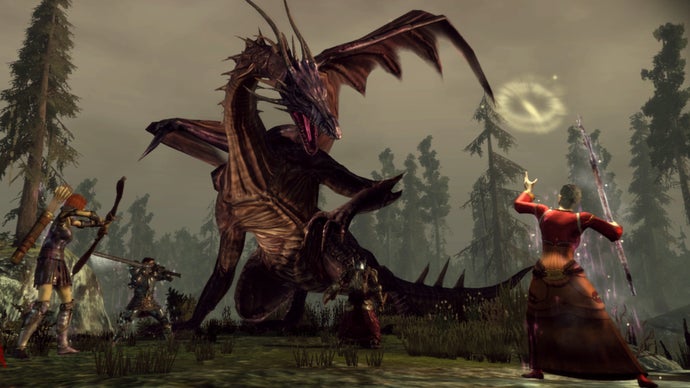
The studio’s recurring issue, according to multiple developers, was a failure to define a project’s core premise early in development, leading to protracted uncertainty. Gaider highlighted Dragon Age’s early premise as 'It’s D&D, but it’s not,' a vague starting point that resulted in prolonged creative struggles. This pattern of indecision persisted despite repeated missteps, including leadership gaps that delayed critical projects like Dragon Age: Veilguard.