New Research: Field Service Leaders Face a Growing Talent Crisis and ROI Challenge Even as They Double Down on AI Investment
Field service leaders invest heavily in AI to improve customer satisfaction and productivity, but workforce readiness and data fragmentation hinder ROI, according to Salesforce’s 2026 global survey of 2,317 professionals.
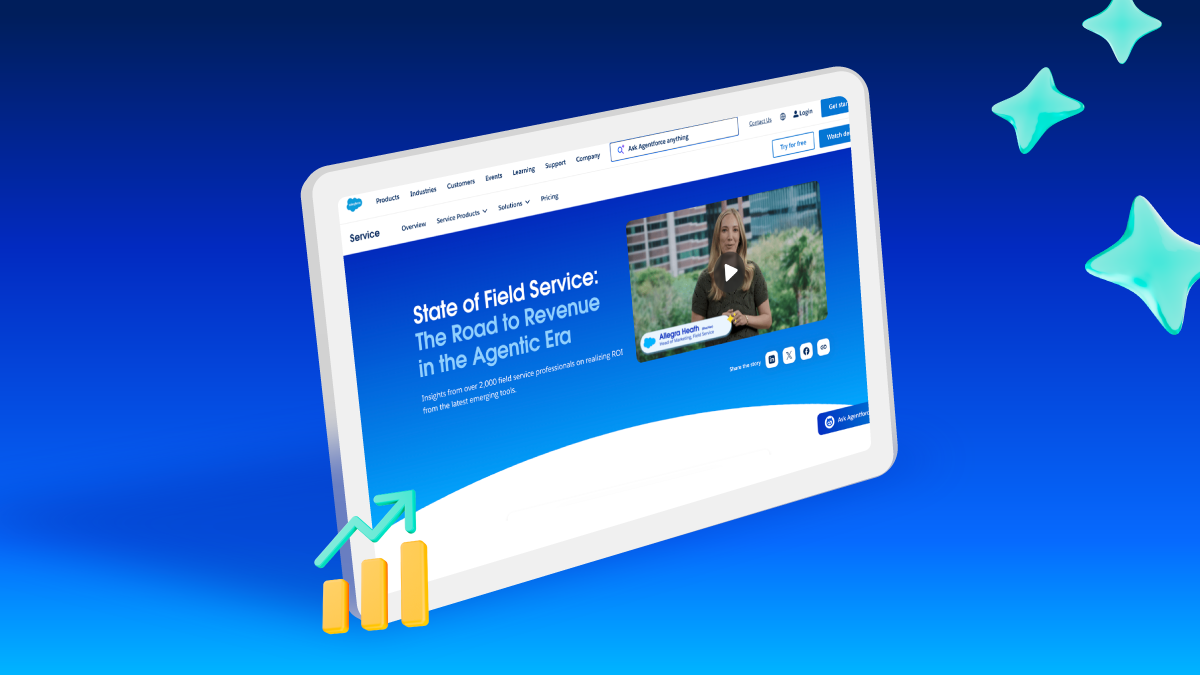
Field service organizations are rapidly adopting AI, with 95% already using some form of the technology and 85% planning to increase investments within two years. The primary goals driving adoption are enhancing customer satisfaction (35%), mobile worker productivity (31%), safety (27%), and revenue (25%). AI tools are currently deployed for customer communication (54%) and field employee assistance (51%).
While 85% of leaders report measuring AI ROI, concrete benefits are most evident in scheduling and dispatch, where 57% of users see higher revenue per job and productivity gains. Additional reported benefits include reduced emissions (52%) and lower labor costs (49%). However, these gains are uneven due to workforce challenges and data accessibility issues.
A workforce crisis is emerging, with two-thirds of leaders reporting increased mobile worker turnover over the past two years. Insufficient training and support during technology rollouts are cited as the leading cause. Compounding the problem, 61% of organizations say mobile workers lack access to critical customer data needed to act on AI recommendations.
Fragmentation in technology platforms exacerbates these issues, with only 16% of organizations reporting unified field and back-office systems. This lack of integration makes it difficult to measure AI effectiveness, with 40% of leaders struggling to assess performance. Organizations prioritize transparency, data security, and vendor support when selecting AI partners, reflecting the critical nature of AI infrastructure.