Why the UN General Assembly still matters
The UN General Assembly endures as a vital forum for global diplomacy despite shifts in power and emerging alternative forums, according to an expert analysis.
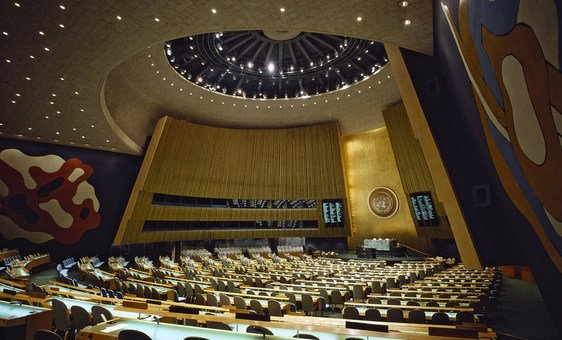
The UN General Assembly, now in its ninth decade, serves as the primary gathering place for the UN’s 193 Member States to address pressing global issues such as conflict, development, climate change, and human rights. Richard Gowan, Director of UN and Multilateral Diplomacy at the International Crisis Group, argues that the Assembly has often taken the lead in international decision-making, particularly when the Security Council became paralyzed by Cold War divisions. Historical records show the Assembly drove discussions on the Palestinian question and the Korean War, stepping in when the Council was gridlocked.
During the 1960s and 1970s, the General Assembly evolved into a platform for newly independent countries, many from the Global South, to voice concerns over apartheid in South Africa and colonial legacies. The Assembly passed resolutions condemning apartheid and later suspended South Africa’s membership in the 1970s, reflecting the growing influence of developing nations. It also championed a resolution in 1974 for a new international economic order, initiating decades of debate on global economic fairness.
Following the Cold War, the Assembly fostered unprecedented cooperation among diplomats, enabling the creation of new UN bodies such as the Peacebuilding Commission, approved in 2005. The global financial crisis of 2008 and 2009 highlighted tensions, as major economies prioritized the G20 over the UN, prompting criticism from Global South countries. Despite this, the period saw increased focus on environmental issues within the Assembly’s agenda.
Gowan emphasizes that the founders of the UN did not anticipate the Assembly’s pivotal role in decolonization or its function as a stage for newly independent states to challenge global power structures. The Assembly’s historical contributions include advancing the end of apartheid and providing a voice to countries emerging from colonial rule, reshaping global politics in ways unforeseen by its architects.