The Iran war will cause global fossil fuel emissions to fall
Global fossil fuel emissions are projected to decline in 2025 due to the Iran war disrupting oil and gas supplies, though the reduction remains modest and coal use has risen in some regions.
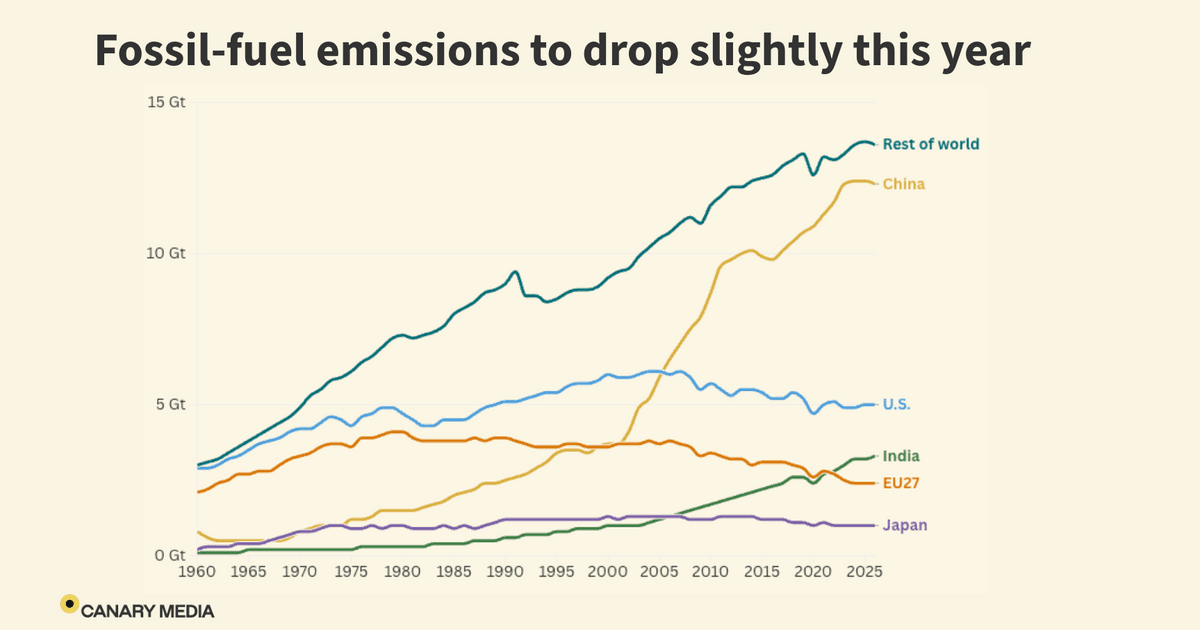
Global fossil fuel emissions are expected to dip this year for the first time since 2020, driven not by a pandemic but by geopolitical conflict. The Iran war has triggered sharp increases in oil and natural gas prices, prompting many countries to reduce consumption and explore alternative energy sources. The decline remains modest, with emissions projected to fall by less than half a percent compared to 2025, according to the Global Carbon Project.
The conflict’s impact on energy markets became clear early on when Iran shut down the Strait of Hormuz, a critical chokepoint for global oil and liquefied natural gas flows. Roughly 25% of the world’s crude oil and 19% of its LNG pass through the strait, which Iran closed shortly after the first U.S.-Israeli strikes. The disruption forced countries to reassess their energy strategies, though the long-term effects on emissions were initially uncertain.
While some nations turned to coal—the dirtiest fossil fuel—to offset energy shortages, the overall decline in oil consumption has outweighed the increase in coal use. The shift reflects efforts to avoid soaring costs, with several countries accelerating investments in electric vehicles and renewables. However, the long-term trajectory of emissions remains uncertain, with analysts divided over whether the trend will persist or reverse once the war ends.
The question now is whether this year’s emissions drop marks the beginning of a sustained trend or a temporary aberration, similar to the pandemic-related decline in 2020. Some experts argue that the war has accelerated cleantech adoption, while others believe oil and gas demand will rebound once hostilities cease. The debate underscores the complex interplay between geopolitics, energy markets, and climate policy.