The puzzle of neutrinos, seventy years on – Home
Seventy years after their detection, neutrinos remain enigmatic particles that challenge the Standard Model, with ongoing experiments worldwide aiming to unravel their properties and cosmic influence.
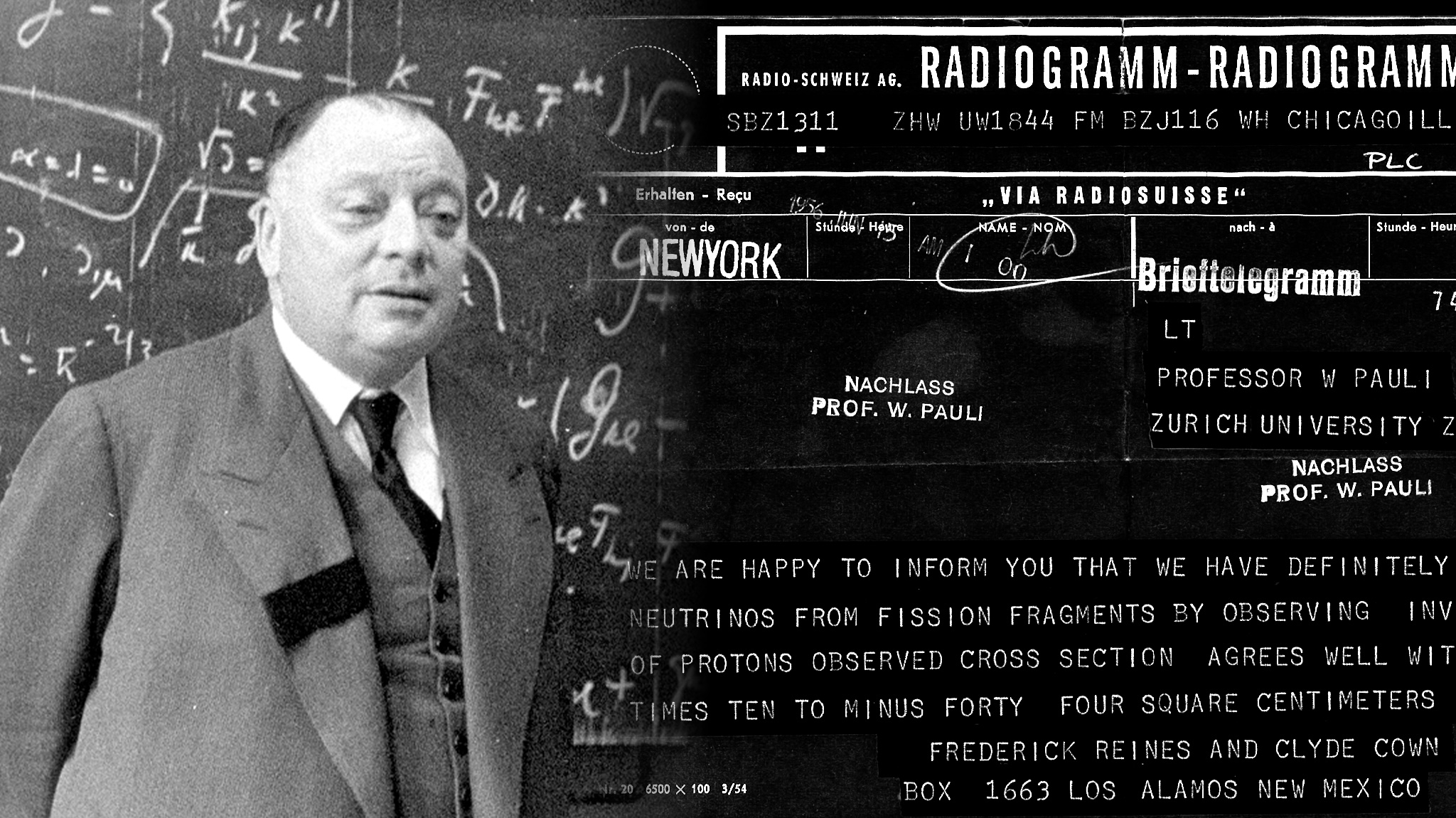
In 1956, Clyde Cowan and Frederick Reines confirmed the existence of neutrinos, first theorised by Wolfgang Pauli in 1930 to explain energy loss in beta decays. These chargeless, nearly massless particles interact so rarely that trillions pass through human bodies every second without notice. Their detection required innovative methods, including tracking neutrinos from nuclear reactors, a technique revisited decades later in modern experiments like China’s JUNO observatory.
Neutrinos exhibit a unique property called oscillation, where one type transforms into another during travel, proven by Japan’s Super-Kamiokande in 1998. This phenomenon implies neutrinos have mass, contradicting the Standard Model. Scientists now seek to determine their mass hierarchy and whether neutrinos behave differently from antineutrinos, with implications for understanding galaxy formation and the early universe.
Global efforts, including CERN’s Neutrino Platform, support next-generation experiments such as DUNE in the US and Hyper-Kamiokande in Japan. These projects send neutrino beams hundreds of kilometres to study their oscillations, requiring precise measurements of beam properties. Neutrino beams are generated by proton collisions, producing unstable particles that decay into neutrinos, but their exact properties remain difficult to pinpoint.
A technique called neutrino tagging, proposed in 1979 by Bruno Pontecorvo, may improve beam precision by linking neutrinos to their parent decays. CERN’s NA62 experiment demonstrated this in 2022, achieving a record 0.3% energy determination. Researchers are now exploring whether tagged beams could enhance the accuracy of long-baseline neutrino experiments, advancing our understanding of these elusive particles.