Alternative Payment Methods: 9 Worth Offering International Customers
Businesses expanding internationally risk losing customers by relying solely on card payments, as alternative methods now dominate global ecommerce and address diverse regional preferences.
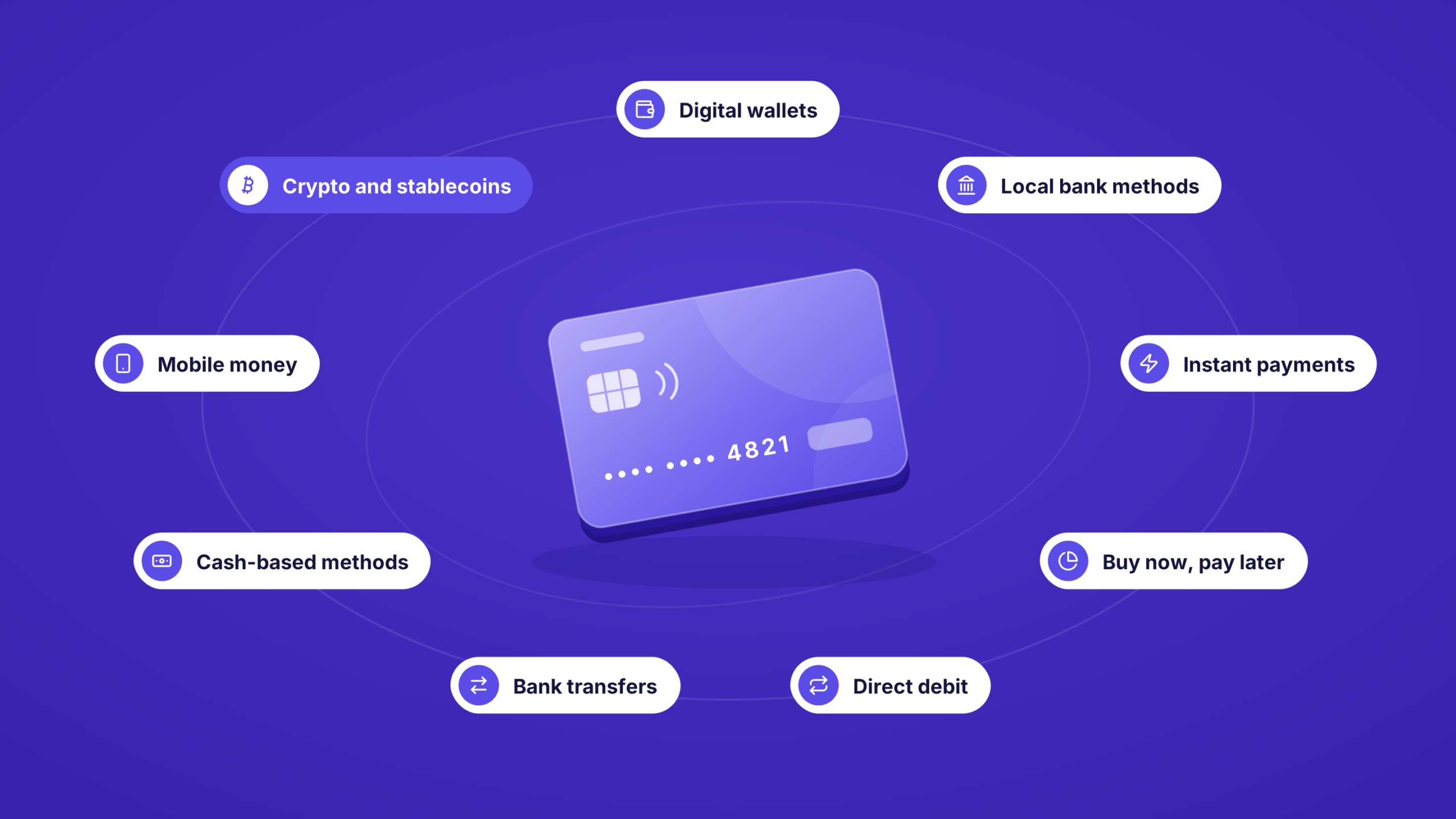
Businesses expanding internationally often lose customers because many shoppers prefer payment methods other than credit or debit cards, such as digital wallets, bank transfers, or mobile money. In markets like the Netherlands, Poland, Brazil, and India, local payment habits are deeply ingrained, and customers may abandon carts if their preferred method isn’t available. Digital wallets alone accounted for 56% of global ecommerce value in 2025, according to Worldpay’s Global Payments Report, highlighting the need for businesses to adapt. Even in the U.S., 10% of shoppers abandoned orders due to card declines, and 9% because of insufficient payment options.
Digital wallets such as PayPal, Apple Pay, and Google Pay reduce friction by eliminating the need to enter card details, while local bank-based systems like iDEAL in the Netherlands or BLIK in Poland address regional payment preferences. Real-time payment systems like Brazil’s Pix and India’s UPI are expanding rapidly, serving as default payment methods in their markets. Buy Now, Pay Later (BNPL) options help customers manage larger purchases by splitting costs into installments, with the provider covering the upfront cost and assuming credit risk.
Bank transfers, including SEPA Direct Debit in Europe, enable subscription-based businesses to avoid card expiration issues and chargebacks, though they carry their own reversal risks. Instant bank transfers within the euro area have improved since October 2025, but international transfers outside SEPA remain slow and costly. Cash-based methods, such as payment vouchers or cash on delivery, cater to customers without bank accounts but introduce delays and operational challenges.
Mobile money solutions like Kenya’s M-PESA address markets where card ownership is low but mobile phone penetration is high, offering a localized alternative to traditional banking. Crypto payments, particularly stablecoins like USDC and EURC, provide cross-border solutions for high-risk industries where cards are frequently declined, as they eliminate issuer involvement and chargebacks.