3D Printing: How Hyundai Motor and Kia Accelerate Product Development Through Additive Manufacturing
Hyundai Motor and Kia opened the Additive Manufacturing Solution Center (AMSC) to accelerate product development using 3D printing, enabling rapid prototyping and complex component production that traditional methods cannot achieve.
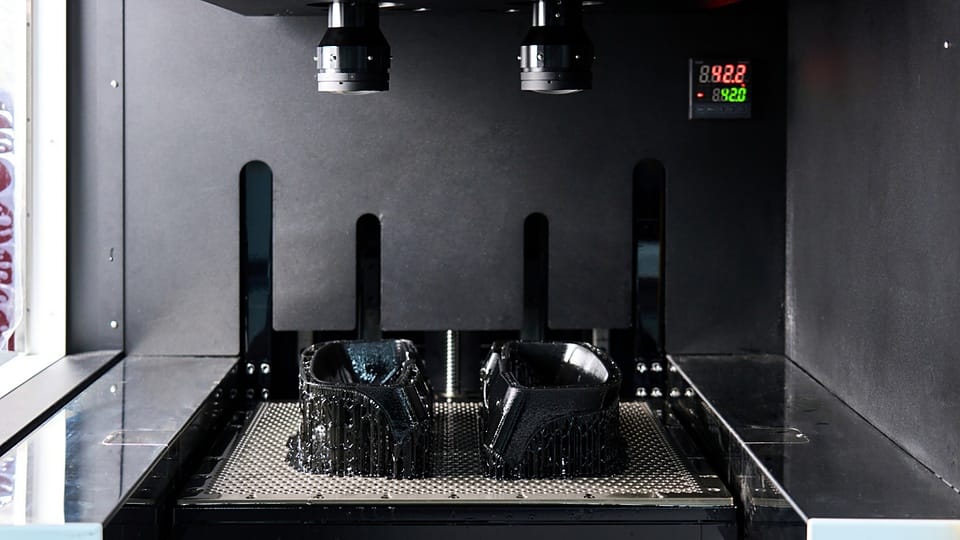
Hyundai Motor and Kia opened the Additive Manufacturing Solution Center (AMSC) at their Namyang R&D Center to overcome limitations of conventional manufacturing. The facility uses advanced 3D printing technologies, including laser-melted metals and powder-sintered polymers, to produce complex components directly from digital designs. This approach reduces tooling needs, minimizes material waste, and allows engineers to optimize weight and geometry without traditional constraints. The center marks the Group’s first dedicated additive manufacturing facility, nearly three decades after its first industrial 3D printer in 1996.
The AMSC employs multiple additive manufacturing processes tailored to different materials and applications. For polymers, it uses Vat Photopolymerization technologies like Digital Light Processing (DLP) and Stereolithography Apparatus (SLA) for detailed components, as well as Polymer Powder Bed Fusion (PBF) for high-quality, customized parts with minimal post-processing. For metals, Metal PBF systems create complex geometries with precision, while Directed Energy Deposition (DED) technologies, such as DED-Wire Arc Additive Manufacturing (DED-WAAM), produce large structural components from materials like steel, aluminum, and titanium.
Engineers at the AMSC optimize components specifically for additive manufacturing, enabling part consolidation, advanced lattice structures, and lightweight designs that improve efficiency without compromising strength. Every component undergoes rigorous validation, including dimensional measurements, tensile strength, and impact resistance tests, to meet production-equivalent standards. The center supports applications across vehicle development, heritage restoration, motorsports, and manufacturing operations, including rapid prototyping, jigs, fixtures, and service parts for discontinued vehicles.
The AMSC serves as Hyundai Motor and Kia’s additive manufacturing hub, integrating design, production, post-processing, and validation capabilities. The technology supports a wide range of applications, from recreating legacy components through 3D scanning to producing lightweight, high-rigidity parts for motorsports. As the Group expands additive manufacturing beyond vehicle components to include equipment consumables and tools, the AMSC demonstrates Hyundai’s ability to physically realize complex designs while advancing digital-first validation processes.