Driving Simulator: How Hyundai Motor and Kia Compressed Years of Track Testing into Hours of Simulation
Hyundai Motor and Kia have developed a virtual Driving Simulator at their Namyang R&D Center to accelerate vehicle testing by replacing months of track work with hours of high-precision simulation, addressing the limitations of physical prototyping.
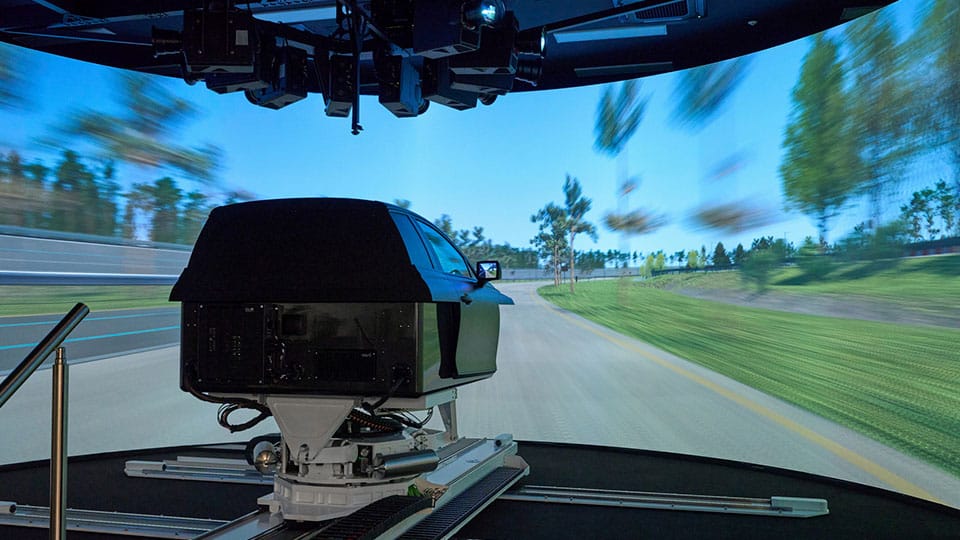
Hyundai Motor and Kia’s Namyang R&D Center in South Korea has introduced a 270-degree curved-display Driving Simulator that replicates real-world driving conditions with such accuracy that engineers cannot distinguish it from actual highway testing. The facility compresses months of physical track validation into hours by using a proprietary virtual platform developed since 2014, leveraging the Group’s own data and engineering expertise. This approach addresses the growing challenge of testing increasingly complex vehicle features—such as electrification and autonomous driving—without the delays and costs associated with traditional prototyping.
The simulator’s photorealistic environment includes a motion platform that replicates lateral g-forces, longitudinal acceleration, and micro-vibrations, while its Terrain Server streams only the immediate road data needed for real-time operation. Engineers can validate dozens of configurations without building prototypes, including high-performance models like Genesis Magma and Hyundai N vehicles, as well as race cars tested on circuits like Germany’s Nürburgring. The system also enables instant adjustments to component characteristics and weather conditions, such as wet-road performance, reducing testing time from days to seconds.
Development of the simulator took approximately 10 months, from April 2025 to completion, with the primary challenge being the integration of real-time vehicle dynamics analysis tools into the simulation environment. The Group’s engineers overcame latency issues by optimizing software and hardware, ensuring seamless operation despite the vast data requirements. This technological leap allows for faster decision-making, directly supporting the competitiveness of Hyundai Motor and Kia by accelerating the delivery of refined vehicles to customers.
The simulator also facilitates global collaboration by enabling engineers at international R&D facilities to share data and evaluate regional vehicle settings within a unified virtual environment. Hyundai Motor and Kia are expanding its role in digital R&D, with plans to upgrade hardware and explore applications in autonomous driving, AI-based validation, and Physical AI. The facility is part of a broader transformation at the Namyang Center, alongside other digital validation tools like the Digital Measuring Center and Additive Manufacturing Solution Center.