Driving Simulator: How Hyundai Motor and Kia Compressed Years of Track Testing into Hours of Simulation
Hyundai Motor and Kia have developed a high-fidelity driving simulator at their Namyang R&D Center to accelerate vehicle validation by replacing months of track testing with hours of virtual simulation, addressing the limitations of physical prototyping.
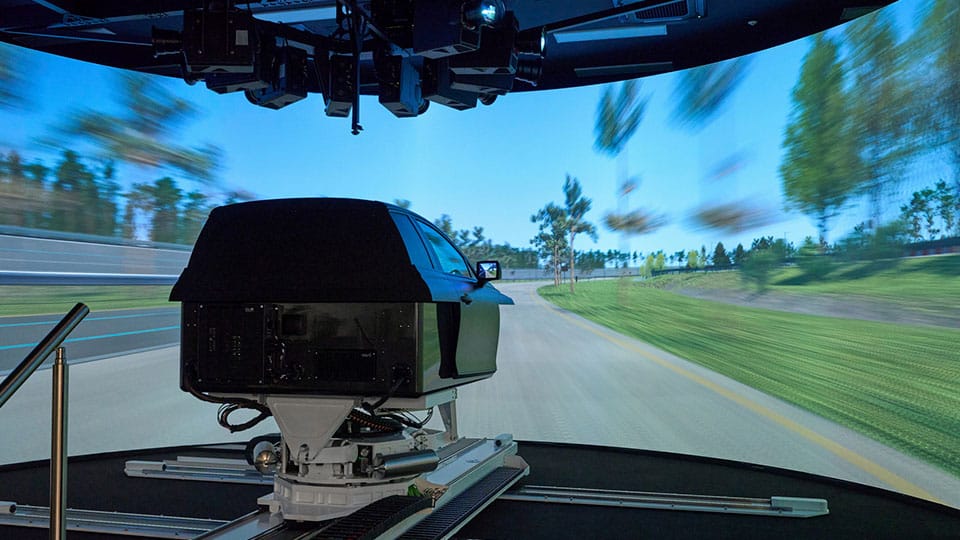
Hyundai Motor and Kia’s Namyang R&D Center in South Korea has introduced a 270-degree curved-display driving simulator to compress months of physical track testing into hours of virtual validation. The facility uses proprietary software and data to replicate real-world driving conditions with such precision that engineers cannot distinguish between simulation and actual highway driving. This approach addresses the growing complexity of vehicle development, where traditional prototyping struggles to meet the demands of electrification, autonomous driving, and connected technologies. The simulator enables rapid evaluation of performance and configurations without the constraints of physical testing environments.
The simulator’s photorealistic environment replicates road conditions in minute detail, including asphalt texture, bumps, and slope variations, captured through 1 mm scans of the Namyang testing grounds. The motion platform tilts and sways to simulate lateral g-forces and longitudinal acceleration, while the Terrain Server streams only the necessary road data to prevent computing overload. Developed over 10 months and completed in April 2025, the simulator faced challenges in integrating real-time vehicle dynamics analysis tools and managing vast data volumes, which were resolved through proprietary streaming technology.
Engineers use the simulator to validate and refine driving characteristics for production vehicles, high-performance models like Genesis Magma and Hyundai N vehicles, and even race cars tested on circuits such as Germany’s Nürburgring. The system allows instant modification of component characteristics and testing of multiple configurations, including wet-road performance, without weather constraints. This accelerates decision-making and reduces the need for physical prototypes, directly supporting faster vehicle development and competitive advantage.
The simulator also facilitates global co-development by enabling collaborative data sharing with international R&D facilities, allowing engineers to evaluate regional settings and local road conditions within a unified virtual environment. Hyundai Motor and Kia plan to expand its role in digital R&D transformation, with potential upgrades to hardware specifications and additional simulator construction. The technology underscores the Group’s shift toward virtual testing and data-driven refinement, with future applications extending to autonomous driving development and AI-based validation.