NOVA Lab: How Hyundai Motor and Kia Find Up to 400 Vehicle Issues Before Prototype Exists
Hyundai Motor and Kia’s NOVA Lab identifies up to 400 vehicle issues before prototypes are built using wire-car test benches and advanced simulations, enhancing early-stage software and system validation.
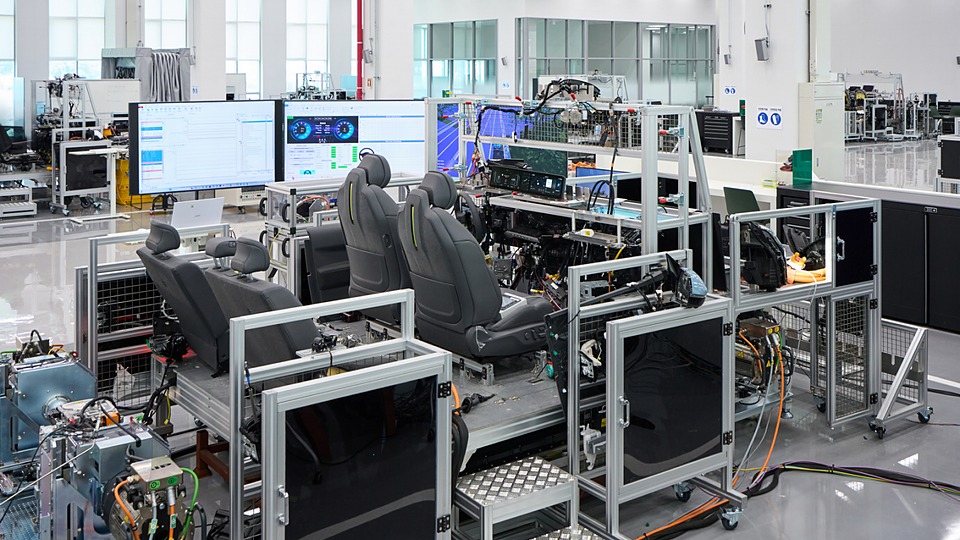
Hyundai Motor and Kia’s NOVA Lab, part of the Global Safety & Quality Office’s Pilot Center, validates entire vehicle electrical architectures before physical prototypes exist. Using full-scale wire-car test benches, engineers connect hundreds of controllers and wiring harnesses to simulate a complete vehicle system. This process helps identify approximately 350 to 400 potential issues during development, addressing problems that may only emerge when systems interact, such as software conflicts or communication errors.
The wire-car test bench replicates a vehicle’s electronic architecture without a physical body, enabling early evaluation of electrical integrity, controller communication, and functional performance. Introduced in 2019 and expanded into NOVA Lab, the system connects 300 to 500 controllers through 500 wiring connectors. Engineers verify signal transmission accuracy, timing, and fault handling, uncovering issues like logic conflicts or abnormal power consumption that component-level testing might miss.
NOVA Lab uses proprietary simulation tools, including a Torque Wheel Dynamometer, to recreate real-world driving conditions. A hardware-in-the-loop (HIL) ADAS simulation environment projects virtual road imagery and generates synthetic traffic targets for radar sensors. This allows validation of advanced driver-assistance systems like Smart Cruise Control and Forward Collision-Avoidance Assist before physical prototypes are tested, reducing reliance on late-stage development cycles.
As vehicles transition toward software-defined architectures, NOVA Lab has expanded to support Ethernet-based communication, 48 V power systems, and over-the-air updates. The facility also validates redundancy strategies for autonomous mobility platforms and cybersecurity systems. By improving software quality early, NOVA Lab aims to ensure customers experience seamless updates and functionality without disruptions from quality-related issues.