Louisiana Students Loft Payloads from NASA Balloon Facility in Texas
Louisiana university and high school teams launched 11 student-built payloads to the edge of space from NASA’s balloon facility in Texas as part of the LaACES program, gaining hands-on aerospace experience and scientific data.
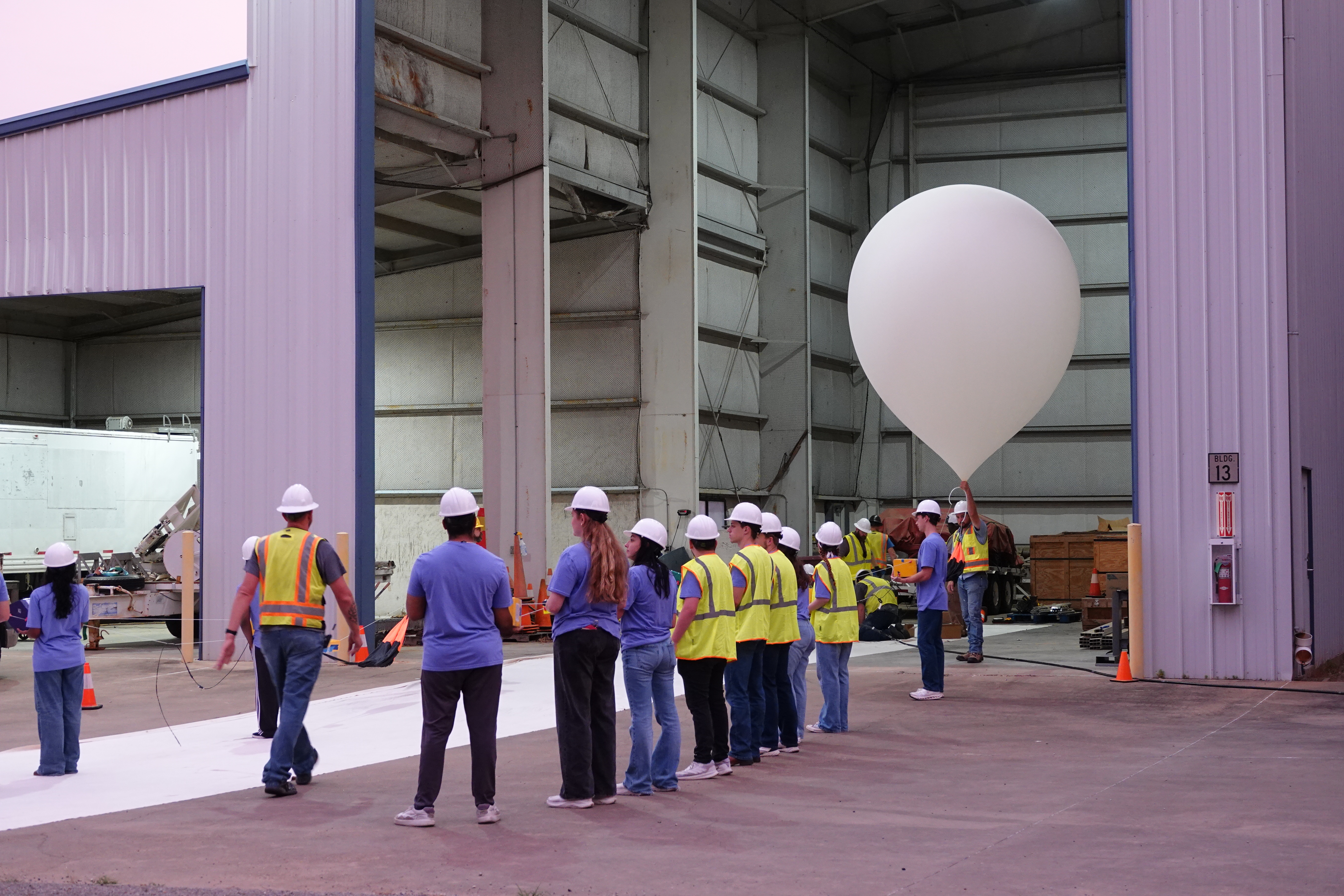
Every May in Palestine, Texas, NASA’s Columbia Scientific Balloon Facility hosts Louisiana students who fly payloads they designed and built over months of preparation. The 2026 LaACES campaign included 11 payloads from nine universities and one high school, each targeting research areas such as atmospheric science, cosmic ray detection, and solar cell performance. Teams followed NASA-style design reviews before traveling to Texas, where facility staff provided launch support, weather briefings, and helium fills to ensure safe operations. The two May 19 launches, LACES-74 and LACES-75, carried 7- to 9-pound payloads to near-space altitudes and were recovered 60 miles north of the site.
Students analyzed post-flight data and presented findings to engineers, mentors, and peers, mirroring NASA’s Scientific Balloon Program’s operational environment. The program bridges classroom learning with real-world aerospace research, offering exposure to payload integration, launch, tracking, and recovery processes. Savannah Matlock of Louisiana State University described the moment as rewarding, noting the satisfaction of seeing expected data behavior validate their work. The initiative aligns with NASA’s broader goals of fostering the next generation of scientists and engineers through hands-on experience.
LaACES is funded by NASA’s National Space Grant College and Fellowship program and administered by the Louisiana Space Grant Consortium. Since its start, the program has supported over 500 students across 13 institutions, launching more than 60 balloon flights and 135 payloads. By placing students in an active research environment, LaACES provides career-shaping experiences that can open pathways to NASA, academia, and aerospace industries. The program’s structure reflects NASA’s engineering lifecycle, from preliminary design to flight readiness, ensuring students gain practical skills alongside technical knowledge.
NASA’s Scientific Balloon Program uses large, sophisticated balloons to carry research instruments to the edge of space for astrophysics, atmospheric science, and technology demonstrations. LaACES serves as a pipeline for future innovators, offering students direct involvement in national research operations. The May 19 launches marked the program’s first flight window of 2026, with both missions completing successfully. For participants, the experience of launching a payload into the sky represents a pivotal moment that transforms curiosity into professional possibility within science and engineering fields.