NASA’s Hubble Telescope Reaches Milestone, Looks for Elusive Supernova
NASA’s Hubble Space Telescope reached its 200,000th orbit and is tracking the predicted reappearance of supernova Athena by early March 2027 to study cosmic expansion and galaxy cluster MACS J0417.
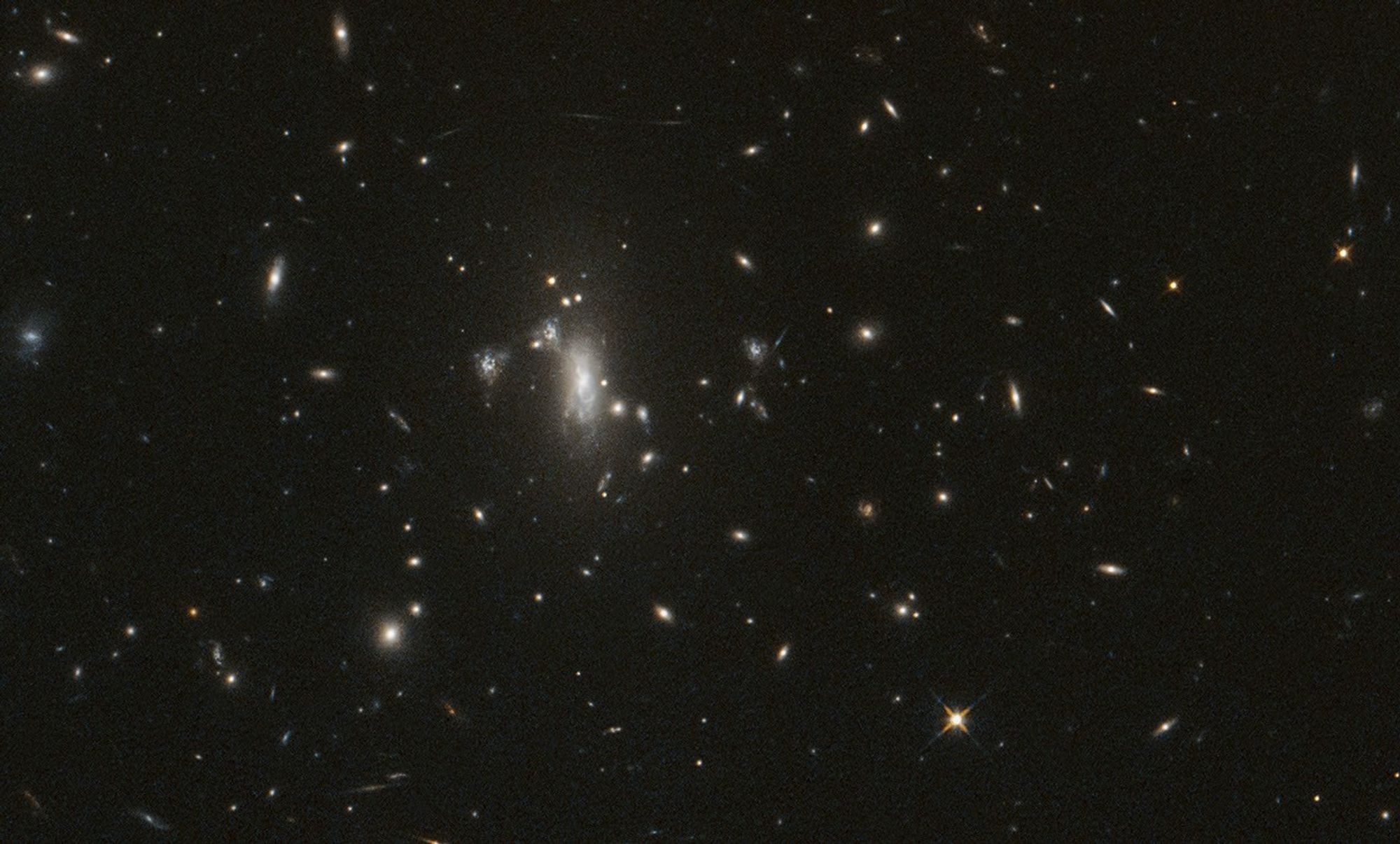
NASA’s Hubble Space Telescope captured an image of the massive galaxy cluster MACS J0417 on Sept. 19, 2026, which functions as a gravitational lens. This lens bends and magnifies light from distant objects behind it, enabling clearer observations of faraway cosmic phenomena. The cluster’s gravitational effects are critical for studying objects that would otherwise remain too faint to detect.
The supernova Athena, first identified by NASA’s James Webb Space Telescope in 2025, is expected to reappear between now and early March 2027 due to the lensing effect of MACS J0417. Researchers plan to measure the timing of these reappearances to map the mass distribution within the galaxy cluster. This data will help refine models of the universe’s expansion rate.
Hubble completed its 200,000th orbit around Earth on Sept. 19, marking another milestone for the nearly three-decade-old observatory. Launched in 1990, Hubble has provided unprecedented insights into the cosmos, including the acceleration of the universe’s expansion. Its longevity underscores its role as a cornerstone of astronomical research.
The combination of Hubble’s orbital milestone and the upcoming reappearance of supernova Athena highlights the telescope’s ongoing contributions to astrophysics. By leveraging gravitational lensing, scientists aim to improve their understanding of dark matter, cosmic distances, and the fundamental properties of the universe.