Land models sprout as degradation threatens billions of livelihoods
The UN Convention to Combat Desertification has recognized three land restoration programmes, aiming to revive nearly five million hectares by 2030 as global degradation threatens billions.
The UN Convention to Combat Desertification (UNCCD) announced three award-winning land restoration programmes at its conference in Mongolia, targeting nearly five million hectares by 2030. UNCCD Executive Secretary Yasmine Fouad emphasized that these efforts demonstrate how restoration strengthens resilience and supports livelihoods amid widespread land degradation affecting over three billion people. The UNCCD highlighted that land degradation, drought, and ecosystem loss now pose fundamental challenges to food, water, and economic security worldwide.
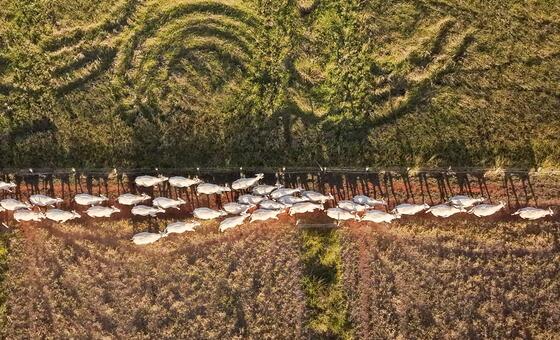
Brazil’s Cerrado savannah, the world’s most biodiverse tropical savannah, has lost over half its native vegetation due to land conversion and climate change. The Restoring Brazil’s Cerrado Savannah initiative, involving 180 partners, uses natural regeneration, agroforestry, and native species seeding to restore degraded areas. Since its launch, the programme has restored over 27,000 hectares and aims to restore two million hectares by 2030, supporting Indigenous rights and food production.
Saudi Arabia’s National Greening Programme aims to restore 40 million hectares and plant 10 billion trees by 2100, with interim targets of restoring 2.5 million hectares and planting 215 million trees by 2030. The programme includes reforestation, natural regeneration, and water conservation techniques like rainwater harvesting and treated wastewater use. By 2030, it expects to create up to 187,000 jobs and improve urban air quality in addition to ecological restoration.
The Sahel Integrated Resilience Initiative, led by the World Food Programme, has rehabilitated over 335,000 hectares across five countries since 2018, benefiting four million people. Monitoring shows 75% of programme sites have improved soil and vegetation, while humanitarian assistance needs declined by 11% during the lean season. By 2030, the initiative aims to restore 470,000 hectares, enhance biodiversity, and sequester up to 20 million tonnes of CO₂.