Money sent home by migrants nearly doubles in a decade
Migrant remittances to low- and middle-income countries nearly doubled over a decade, reaching $728.6 billion in 2025, according to a UN report, with digital transfers rising but cash collection still common.
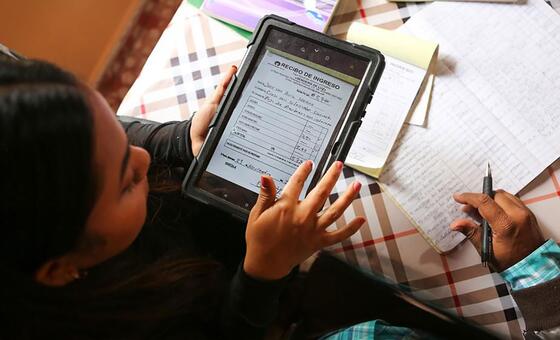
The UN’s International Fund for Agricultural Development (IFAD) reported that migrants sent $728.6 billion to families in low- and middle-income countries in 2025, nearly double the amount a decade earlier. Growth in remittances outpaced the increase in migrant numbers, indicating larger individual transfers rather than just more people sending money. Pedro de Vasconcellos of IFAD noted that behind these billions are frequent small transfers, typically $300 to $400 sent nine or ten times a year, supporting an estimated 1.1 billion relatives globally.
IFAD highlighted that remittances exceeded global official development assistance and foreign direct investment to these countries in 2025. The report warned that families and economies in regions like Latin America and the Caribbean are vulnerable to policy changes affecting migrants, such as deportations or employment restrictions. Central America remains highly exposed, with remittances accounting for 30 per cent of GDP in Honduras, 28 per cent in El Salvador, and 27 per cent in Nicaragua in 2025.
Latin America and the Caribbean saw the fastest remittance growth of any region, rising 132 per cent to $168.6 billion in 2025. Asia and the Pacific remained the largest recipient region overall, receiving $384.9 billion, or 53 per cent of the global total. Africa received $124.2 billion, an 86 per cent increase over the decade, with Egypt overtaking Nigeria as the continent’s largest recipient.
Around three quarters of remittances fund immediate needs like food, shelter, and utilities, while the remaining quarter supports healthcare, education, housing, savings, and businesses. Nearly $233 billion reached rural economies in 2025, where access to jobs and services is often limited. Digital transfers now account for over half of remittances but only 35 per cent of services were fully digital from sender to recipient, with digital transfers costing an average of 4.6 per cent compared to 7.3 per cent for non-digital services.